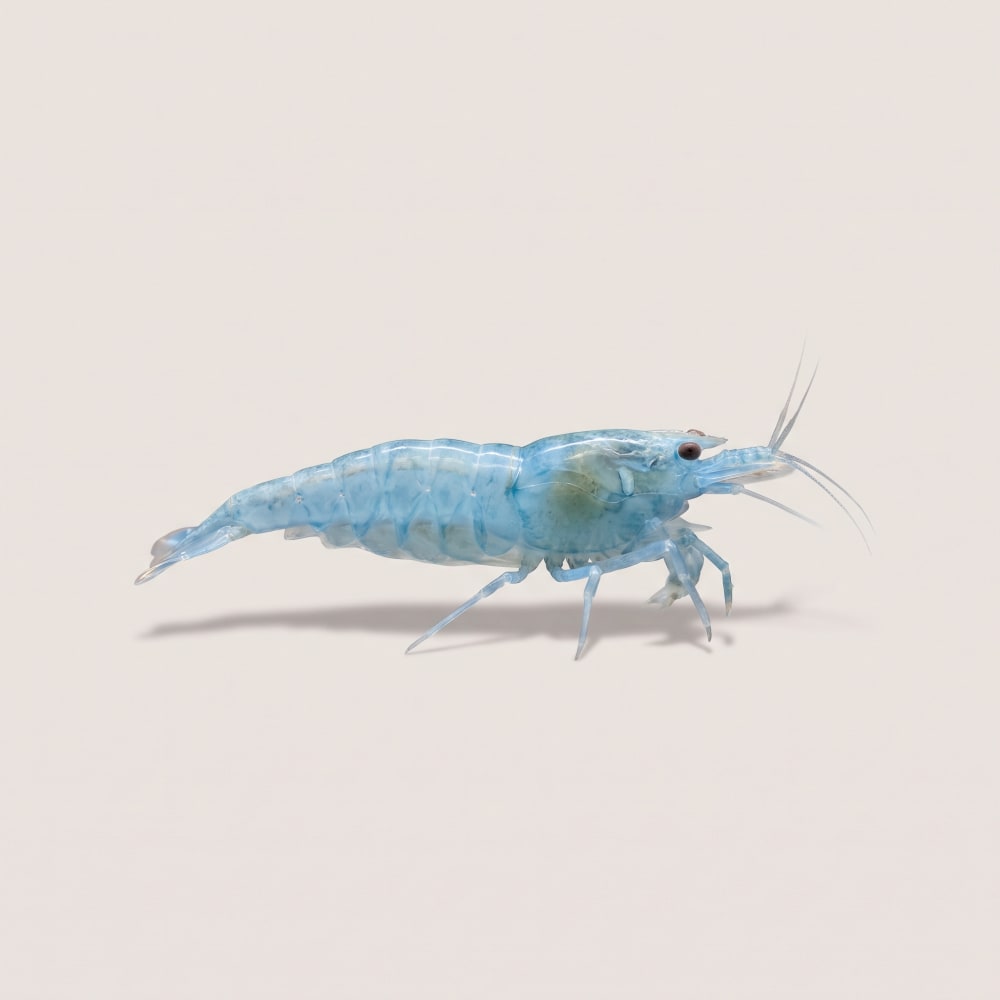
The Blue Velvet is the blue most keepers fall for first: a light sky-to-powder blue with a glassy, semi-translucent quality, closer to sea glass than paint. It's also the blue most often confused with its darker cousin, so we'll settle the Blue Dream question properly below. Underneath the colour, as ever, it's a cherry shrimp — hardy, prolific and genuinely easy.
Blue Velvet at a glance
| Difficulty | Easy |
| Adult size | 2.5–3cm |
| Lifespan | 1–2 years |
| Temperature | 18–26°C |
| pH | 6.8–7.6 |
| GH | 6–12 |
| TDS | 150–250 |
| Breeding | Prolific |
What is a Blue Velvet shrimp?
Blue Velvet is a colour line of Neocaridina davidi — the same species as the red cherry — selected for light blue rather than red. The name describes the finish as much as the shade: a good velvet carries an even, powdery blue over a shell you can still partly see through, so the shrimp reads bright and luminous rather than solid. Under strong light you'll catch the internals faintly through the blue, and that glassiness is the line's signature, not a weakness.
Where the line came from is argued about, as most Neocaridina origins are, but most velvet lines are traced back to blue rili breeding — blue picked out of the clear-bodied rili shrimp and selected toward full coverage. That ancestry still shows. Velvet broods commonly throw the odd shrimplet with clear patches or an outright rili-patterned body, and it isn't a fault or a mixed tank — it's the line's history surfacing. We'll come back to it under grading.
Blue Velvet vs Blue Dream
This is the number one question we get about either shrimp, so here it is plainly: velvet is the lighter, partly see-through blue, and Blue Dream is the darker, solid one.
| Blue Velvet | Blue Dream | |
|---|---|---|
| Shade | Light sky or powder blue | Deep navy, near-black in some light |
| Opacity | Semi-translucent, glassy | Opaque and solid |
| Usual lineage (as breeders tell it) | Blue rili | Velvet and chocolate lines |
| In the tank | Bright, luminous, catches light | A dense block of dark colour |
Neither is a higher grade of the other; they're different targets, and which you prefer is taste. Because sellers use both names loosely — and a third line, Blue Diamond, covers the darkest blues — judge the shrimp in the photo, never the name on the listing.
Colour and grading
Velvets are graded on how even and clean the blue is. Standard grade shows honest blue with translucent gaps and patching; high grade is consistent powder blue from nose to tail, still glassy in character but with no obvious holes in the colour. Females run larger, deeper and more opaque than the slimmer, paler males, and juveniles deepen as they mature, so grade adult females rather than shop-tank youngsters. Where velvet sits against every other line is in the Neocaridina grades guide.
Expect the rili throwbacks we mentioned: shrimplets with clear saddles or midsections turn up in most velvet lines sooner or later. We pull the strongly patterned ones from the breeding tank to keep the line tight, but they're pretty shrimp in their own right, lose nothing in health, and make a charming display tank on their own.
Care
Identical to every cherry shrimp, so the cherry shrimp care guide applies wholesale. The short version: a cycled tank of 19L or more (10L at a push), a sponge filter, inert substrate, and stable water at 18–26°C, pH 6.8–7.6, GH 6–12, TDS 150–250. Stability beats perfection, and an unheated UK room at 18–21°C is fine — breeding just runs slower than at 21–24°C.
One aesthetic note that matters more for velvets than most lines: over pale sand a light blue shrimp all but vanishes, while dark substrate and dense planting make the same animal look a grade better. Most hard-water UK areas can run velvets straight from the dechlorinated tap; soft-water regions should check the UK tap water guide and remineralise if needed. Dechlorinate every drop, and never let copper near the tank.
Breeding true
Mostly, with an honest asterisk. Velvet paired with velvet gives blue offspring generation after generation, but the rili ancestry means a minority of each brood shows clear patches or full rili patterning. Selection keeps that ratio low: breed from your most even blues and move the patterned shrimp elsewhere before they mature at 3–5 months. The mechanics are otherwise standard Neocaridina — 20–30 eggs carried for 14–21 days, shrimplets grazing biofilm from day one — and the whole process is in how to breed cherry shrimp.
The non-negotiable rule is one colour line per tank. Velvets interbreed freely with every other Neocaridina colour, and mixed lines drift back to brownish wild-type shrimp within a couple of generations — the genetics are in mixing Neocaridina colours.
Buying Blue Velvet shrimp in the UK
Standard-grade velvets run £2–4 per shrimp in the UK, with high-grade, evenly coloured lines at £30–50 per 10. The buying trap is the naming: "blue velvet" and "blue dream" get swapped freely in listings, so decide which blue you actually want and buy from photos of the seller's real stock rather than library images. A group shot showing consistent light blue across ten shrimp tells you more than any grade word in the title, and a seller who can tell you their water parameters is worth an extra pound a shrimp. Our own velvet colony is restocking at the moment — join the waitlist on this page and we'll email you when the next batch is graded.
FAQ
What is the difference between blue velvet and blue dream shrimp?
Depth and opacity. Blue Velvet is a light sky blue you can partly see through; Blue Dream is a deep, opaque navy. They're the same species with identical care — different selective targets — though sellers muddle the names often enough that the photo is a better guide than the listing title.
Why do some of my blue velvet shrimp have clear patches?
Because of where the line comes from. Most velvet lines trace back to blue rili breeding, and the rili pattern — glassy, clear patches on a coloured body — resurfaces in a minority of every brood. It's normal and completely harmless. If you're breeding for grade, simply keep the patched shrimp out of the breeding tank.
Are blue velvet shrimp easy to keep?
Yes. They're Neocaridina davidi, so they take the same easy care as any cherry shrimp: 18–26°C, pH 6.8–7.6, GH 6–12 and stable, dechlorinated water. If a red cherry would thrive in your tank, so will a velvet.
How much do blue velvet shrimp cost in the UK?
£2–4 each for standard grade and £30–50 per 10 for high-grade, even blue. Be suspicious of "high grade" priced like standard stock, and check whether a cheap "blue shrimp" listing is actually velvet, dream or an unnamed mixed blue before you pay.