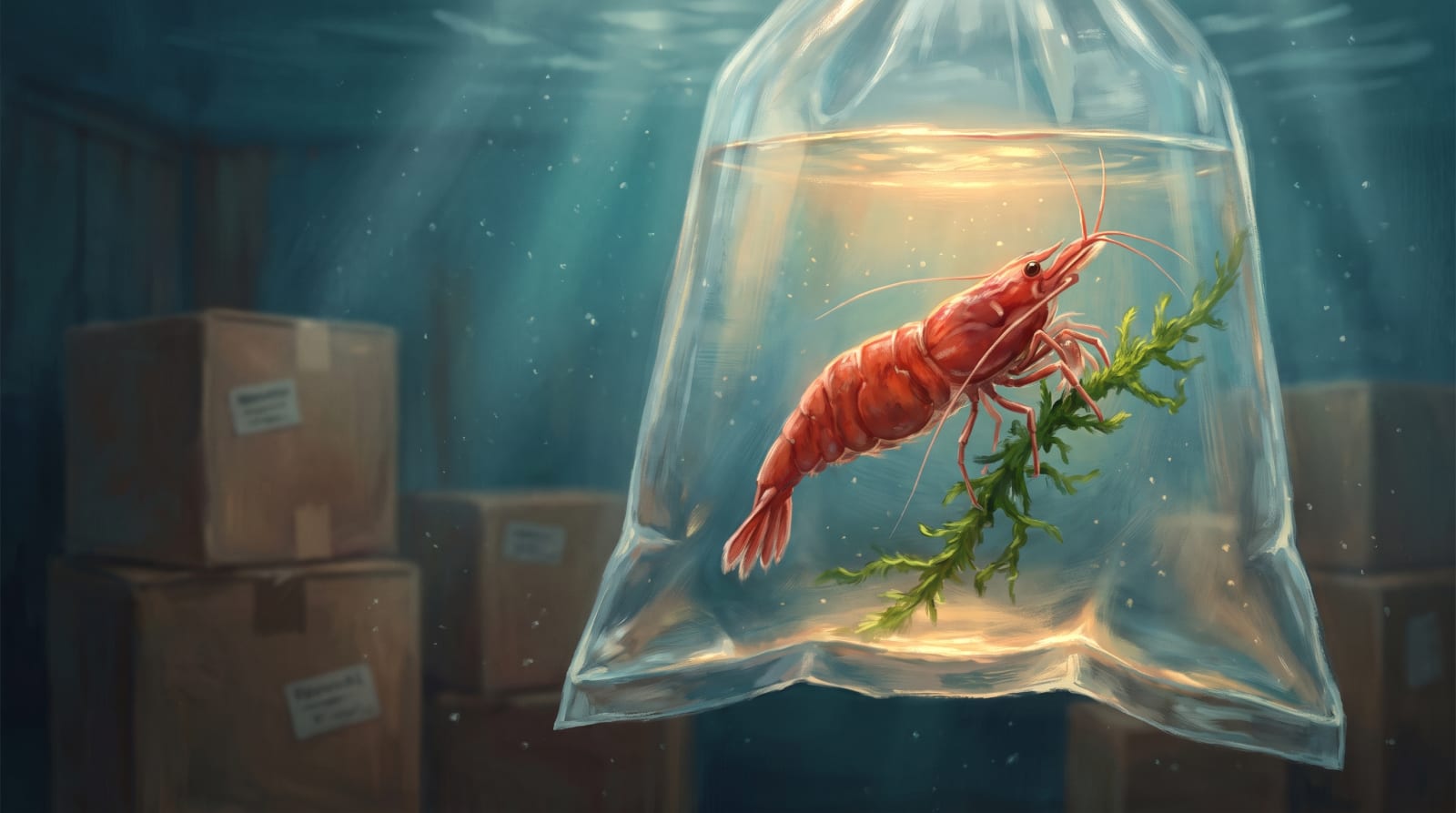
Moving house is one of the few genuinely stressful things you can put a shrimp colony through, and it's also one of the most survivable if you plan it properly. The trick is understanding what you're actually moving. It isn't the tank and it isn't the water — it's the living biology, the shrimp themselves and the invisible bacteria that keep them alive. Protect those two things and a shrimp tank travels better than almost any fish tank, because the animals are small, tough and used to hiding.
We've moved tanks between houses and shuffled colonies around the breeding room more times than we can count. Every safe move comes down to the same short list: keep the filter alive, keep the shrimp stable, and get everything back together the same day. The tank itself goes in the van empty.
What you're really moving
A cycled shrimp tank is a working ecosystem. The shrimp are the visible part, but the part that keeps them alive is the colony of nitrifying bacteria living in the filter, on the substrate and across every surface. Those bacteria are what turn toxic ammonia into harmless nitrate, and they're far more fragile in a move than the shrimp are. Let them die and you land at the new house with healthy shrimp and a tank that can no longer process their waste — an ammonia spike waiting to happen.
So the whole plan bends around one rule: keep the biology alive and keep it stable. The shrimp need protecting from sudden swings in temperature and water chemistry, exactly the way new arrivals do when you first buy them. The bacteria need to stay wet, warm-ish and out of the light. Everything below serves those two needs.
Before moving day
Plan the tank as a same-day job, start to finish. A shrimp colony can sit bagged for several hours without much trouble, but the longer the bacteria in the filter are out of the tank, the more of them die off. Aim to be the last thing packed at the old house and the first thing set up at the new one.
Stop feeding a day or two before the move. A shrimp that hasn't been fed for 48 hours is in no danger — a mature tank feeds them on biofilm anyway — and an empty gut means cleaner transport water with less to foul it. This is the one time a skipped feed is doing real work.
Gather your kit the night before so nothing is buried in a box when you need it:
- Bags or lidded tubs for the shrimp, and separate ones for the filter media
- An insulated cool box to hold the bags steady in transit
- Two or three buckets with lids to carry saved tank water
- Your dechlorinator, a thermometer and a TDS pen for the reset
- Airline tubing for drip acclimatising the shrimp back in
Bagging the shrimp
Never bag shrimp in bare, empty water. Give every bag a generous knot of moss or a portion of plant, and it changes the whole journey for them. Shrimp are grippers by nature, and a bag of open water leaves them tumbling with nothing to hold; a fistful of java moss gives them somewhere to cling, somewhere to hide, and a surface of biofilm to graze if the trip runs long. A bag of red cherries riding on a raft of moss arrives calm; a bag of shrimp in clear water arrives frantic.
Use old tank water for the bags, never fresh tap. Fill to no more than about a third water to two-thirds air, or use proper breather bags if you have them, and don't crowd them — a dozen or so shrimp to a decent-sized bag is plenty. Double-bag in case of a leak, knot them well, and stand them upright in the cool box so they can't roll. The cool box is doing the most important job of all here: holding the temperature steady across a day when the tank's own thermal mass is gone.
Keep the bags dark. A closed cool box does this for you, and darkness settles shrimp the way it settles most animals. Warm interior light and jostling are the two stressors you're insulating them from.
The filter is the tank
If you get one thing right, make it this. The mature filter is where most of your beneficial bacteria live, and those bacteria are the real cargo. Keep the filter media — the sponge, the biomedia, whatever your filter runs — thoroughly wet in a tub or bag of old tank water for the entire journey. It must never dry out and it must never cook in the sun. A sponge left to go dry, or baked on a warm car seat, is a dead sponge, and a dead sponge means starting your cycle from scratch at the new house.
Two more rules for the media. Don't rinse it clean while you're at it — you'd be washing away the very colony you're trying to move; a gentle squeeze in old tank water to stop it clogging is as far as you go, and only if it needs it. And keep it dark and cool alongside the shrimp, not in a separate hot box. Treat the filter media as carefully as you treat the livestock, because in a real sense it is livestock.
The sponge filter that runs most shrimp tanks makes this easy — it's a single lump of colonised foam you can drop straight into a tub of tank water. If you're not already running one, our sponge filter guide explains why it's the shrimp keeper's default, and a move is a good argument for it.
The tank travels empty
Glass tanks are designed to hold water when they're sitting level on a stand, not to be carried with the water sloshing inside. The weight flexes the seams and a full tank can split in transit, so the tank always travels empty of standing water.
Empty, though, does not mean stripped and scrubbed. Leave the substrate in the tank and keep it damp. The substrate holds a share of your bacteria too, and washing it out or letting it dry defeats the point of a careful move. Pour off most of the water into your buckets to save it, then move the tank with the substrate still in place and just enough moisture left to keep it from drying — damp, not flooded. For a small nano tank the substrate adds little weight and rides fine in place; for anything larger, scoop the damp substrate into a lidded bucket so you're not carrying that load in the glass.
Save as much old tank water as your buckets allow. It won't keep your cycle going on its own — the bacteria live on surfaces, not floating in the water — but refilling with a good slug of the original water massively softens the parameter jump the shrimp feel when they go back in. Hardscape and plants travel in their own bags or tubs of tank water, or wrapped in wet kitchen roll for a short hop, so nothing precious dries out.
Resetting at the new house
Set the tank up the same day, before you unpack a single box that isn't shrimp-related. Level it on its stand, settle the substrate back, replace the hardscape and plants, and refill using your saved tank water topped up with fresh water that's been dechlorinated and temperature-matched. Then get the filter running immediately — the bacteria need flowing, oxygenated water within a couple of hours or they start to suffocate. This is the same careful build as a first setup, just faster and with living media already in hand.
Let the tank settle and clear for an hour or two while the filter circulates and the temperature evens out. Then, and only then, bring the shrimp back in — and treat them like new stock, because to them the water is new. Drip acclimatise them over an hour or two rather than tipping them straight in: however careful you've been, the reset water won't be a perfect match for what left the old house, and a sudden change in TDS or temperature is exactly the kind of swing that kills shrimp. The bag water goes down the drain, not into the tank.
The week after
Watch the water closely for the first week or two. Even a well-managed move can knock the bacteria back enough to cause a small "mini-cycle", where a little ammonia or nitrite appears while the colony rebuilds. Test every day or two, keep a dechlorinated water change ready if anything registers, and read our ammonia, nitrite and nitrate guide if you need the safe-level numbers to hand — for shrimp, anything above zero on ammonia or nitrite needs acting on.
Go easy on feeding for the first week. A barely-fed tank produces less waste while the filter finds its feet, and your shrimp are living on biofilm regardless. Expect them to look washed out and to hide for a few days — that's stress colour, not illness, and it lifts as they settle. Give it a fortnight and a well-moved colony carries on as though nothing happened.
FAQ
How do you move a shrimp tank without killing the shrimp?
Keep the filter media wet and cool for the whole journey so the beneficial bacteria survive, bag the shrimp in old tank water with a knot of moss to grip, and move the tank empty of standing water with the substrate left damp inside. Reset everything the same day, refill with saved tank water topped up with dechlorinated fresh water, then drip acclimatise the shrimp back in slowly rather than tipping them straight into the new water.
Can you move an aquarium with the substrate still in it?
For a small shrimp tank, yes — leave the substrate in place and keep it damp, because it holds part of your beneficial bacteria and washing or drying it sets your cycle back. Just pour off the standing water first, since a tank should never be carried full. For a larger or heavier tank, scoop the damp substrate into a lidded bucket so the weight isn't riding in the glass, which can split the seams.
How long can cherry shrimp survive in a bag?
Comfortably several hours, and often a full day, if the bag holds old tank water, a piece of plant or moss to grip, and plenty of air above the water — or if you use a breather bag. Keeping the bags dark and at a steady temperature in an insulated box matters far more than the exact hours. The real risk on a house move isn't the shrimp timing out; it's the filter bacteria dying, so treat the media with the same urgency.
Do you need to re-cycle a tank after moving house?
Usually not fully, if you keep the filter media wet and the substrate damp — the bacteria that make up your cycle survive the trip and carry on at the new house. Expect a small "mini-cycle" at worst, so test for ammonia and nitrite for a week or two and do gentle water changes if anything shows. A move where the media dried out or overheated is different: that can mean cycling again from scratch, which is why protecting the filter is the whole job.
Should you feed shrimp before moving them?
No — stop feeding a day or two before the move. An empty gut means cleaner transport water with less to foul the bags, and a mature tank feeds shrimp on biofilm anyway, so a couple of missed meals does no harm at all. It's the one occasion where deliberately skipping feeds is the right call, and it pays off in calmer, cleaner bags on the day.