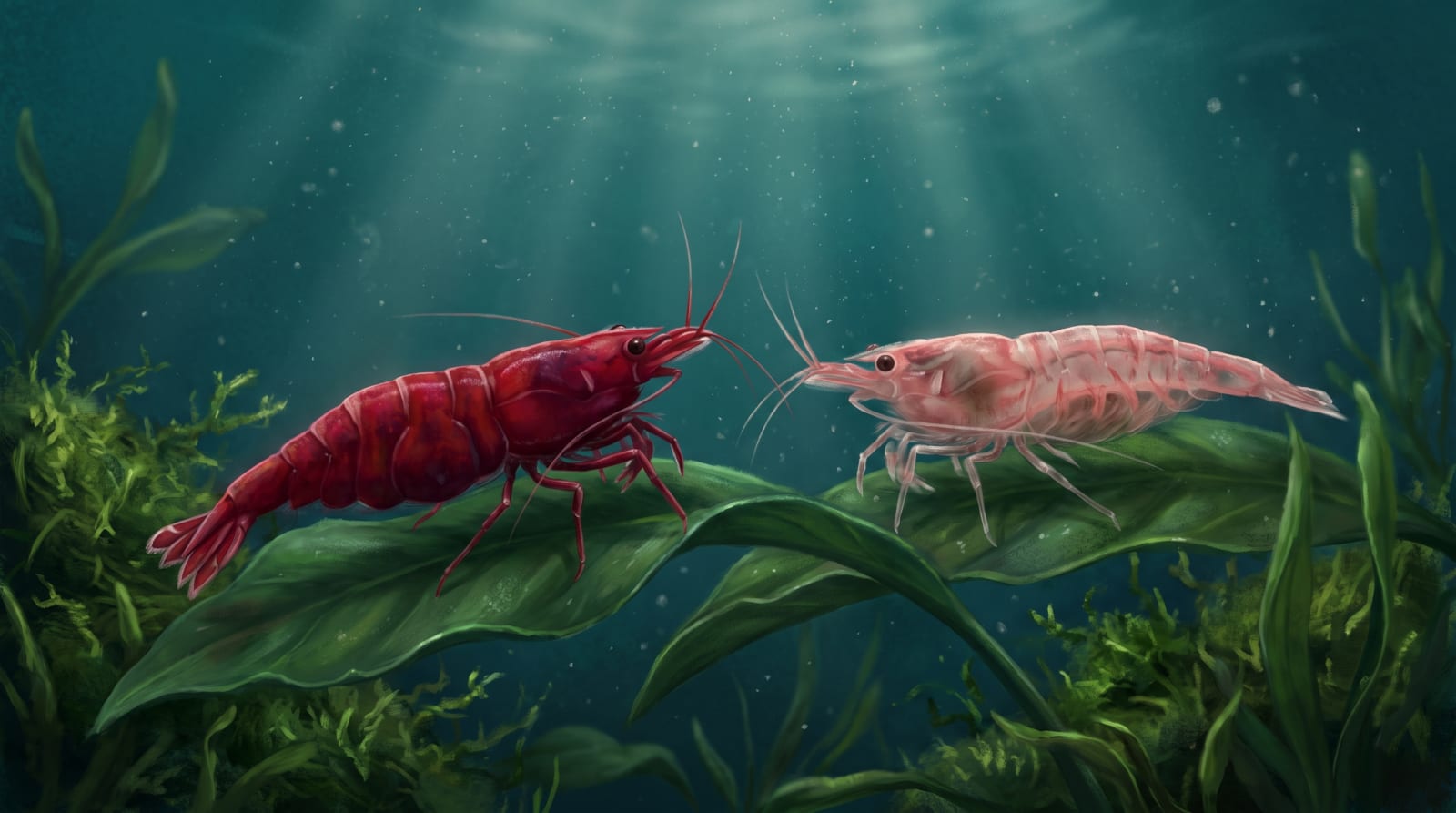
A cherry shrimp gone pale, patchy or washed out is one of the most common worries new keepers bring us, and the reassuring news is that it's rarely a disease. Colour in these shrimp is a moving target — it shifts with mood, background, diet, age and, most permanently, genetics — so "losing colour" usually means one of a handful of ordinary things rather than a sick animal. The trick is working out which, because the fix for a stressed shrimp is nothing like the fix for a fading bloodline.
What isn't colour loss: moults and necrosis
Before chasing causes, rule out two things that look like fading but aren't. The first is an ordinary moult. A shrimp that's just shed its shell looks pale and glassy for a few hours because the fresh shell hasn't pigmented up yet; give it a day and the colour firms back. If your "fading" shrimp is a one-off that recovers overnight, you probably watched a moult.
The second is more serious and worth telling apart clearly. A shrimp turning opaque, milky white inside the body — usually starting in the tail muscle — isn't losing surface colour, it's showing muscular necrosis, a stress or bacterial condition that's a genuine health problem. The tell is depth: true colour loss is the shell going pale while the shrimp stays translucent and otherwise normal, whereas necrosis is solid white meat showing through. If it's the latter, our diagnostic checklist for dying shrimp is the better starting point than this guide. Everything below is about genuine fading in an otherwise healthy shrimp.
Stress: the most common cause, and the most fixable
Most sudden colour loss is stress, and stress colour is reversible. A shrimp under pressure literally pales — it's the single fastest thing to change a cherry shrimp's appearance — and the good news is that it changes back once the pressure comes off.
The classic case is new arrivals. Shrimp turn up from a seller looking washed out and stay that way for a day or two, because being bagged, posted and dropped into unfamiliar water is about as stressful as their lives get. That isn't a con or a sick batch; it's normal, and colour returns as they settle — provided they were acclimatised gently, which is exactly what our drip acclimation method is for. A hard, rushed transfer stresses them far longer.
In an established tank, shrimp that stay pale usually mean ongoing stress. The common sources are predators or boisterous tankmates keeping the colony on edge, unstable water lurching around, or a tank so bright and bare the shrimp never feel safe enough to relax and colour up. Take the pressure off — cover, stable parameters, the right tankmates or none — and the colour follows.
Background and light: shrimp match their surroundings
Cherry shrimp adjust their depth of colour to their background, and it's a bigger effect than most people expect. Drop a group onto pale sand under a bright light and they'll thin their colour to blend in; move the same shrimp onto a dark substrate under moderate light and they'll deepen up within days. Nothing about the animal has changed — it's camouflage, and it's completely reversible.
This is the easiest cause to test and to fix. If your shrimp look weak against a bright, sandy tank, a darker substrate is the single biggest cosmetic lever you have, which is why we run dark substrates on every colony we want to photograph well — the reasoning is in our guide to substrate for Neocaridina. Easing off blazing lighting and adding planting and cover helps too, for the same reason: a shrimp that feels safe shows better colour than one that feels exposed.
Diet: colour is partly built from food
A shrimp's colour is partly fed. The red, yellow and orange pigments in Neocaridina are built with help from carotenoids the shrimp takes in through its food, so a thin or monotonous diet can leave a colony looking flat over time, while a varied one keeps it rich. This is a slow effect rather than an overnight one — think weeks of dull feeding showing up as dull shrimp.
You don't need a special "colour" product to manage it. A varied diet built on biofilm and algae, with algae- and spirulina-based staples and the occasional vegetable and protein treat, covers the pigments a shrimp needs — the everyday feeding we set out in what cherry shrimp eat. Feeding for colour is really just feeding well and with variety, rather than dosing anything exotic.
Age: old shrimp fade
Some colour loss is simply age. Cherry shrimp live one to two years, and an old shrimp often loses a little depth and vibrancy in its final months, the same way it slows down generally. Heavily bred females can lose some intensity too, after many broods, having put a lot into producing eggs.
There's nothing to fix here, and nothing wrong. In a breeding colony the generations overlap so completely that you rarely notice individuals ageing out — there's always a fresh crop colouring up as the oldest fade. If your very palest shrimp are also plainly your oldest, largest, most-bred animals, age is the likely answer and not a problem to solve.
Genetics: the fade that doesn't come back
Everything so far is reversible. Genetic colour loss is the one that isn't, and it's what's happening when a whole colony gets paler over generations rather than one shrimp fading and recovering. Two versions are common.
The first is mixed-line reversion. Every Neocaridina colour is a selected line of one species, and when you keep different colours together they interbreed freely — the offspring trend back towards the muddy wild-type brown their ancestors came from, usually within a couple of generations. A tank that started as bright reds and blues and drifted to brownish nondescript shrimp hasn't caught anything; it's crossbred, and we explain the mechanism in can you mix Neocaridina colours. One colour line per tank is the only way to keep colour true.
The second is low-grade stock washing out. Even within a single line, colour is held up by constant selection — every generation throws some paler individuals, and if nobody removes them from the breeding pool the average colour slides downhill. Cheap "cherry" shrimp are often low on the grading ladder to begin with, and left to breed unselected they get plainer, not brighter. Holding or improving a line means selecting your best-coloured shrimp to breed from, the basics of which sit in our guide to Neocaridina grades. If you want reliably deep colour, start from good red cherry stock and keep selecting.
Working out which one it is
Run the causes in order and you'll usually land on the answer fast. Did the colour drop suddenly, on one shrimp or a new arrival, with the animal otherwise healthy? That's stress — fix the pressure and wait. Are the shrimp pale against a bright, sandy tank? Try a darker background. Has a whole colony looked flat for weeks on a dull diet? Feed with more variety. Are your palest shrimp your oldest? That's age. And is the entire colony sliding towards brown over generations? That's genetics — stop mixing lines and start selecting.
Notice how far down that list disease comes: it barely features, because a shrimp losing surface colour while eating, grazing and moulting normally is not usually ill. Keep the ordinary care steady — the stable, unhurried routine in our cherry shrimp care guide — and most colour worries either sort themselves out or turn out to be genetics you can breed your way back from.
FAQ
Why is my cherry shrimp losing its colour?
Usually stress, background, diet, age or genetics — rarely illness. A single shrimp that pales suddenly and then recovers is almost always stress or a recent moult. A whole colony fading over weeks points to a dull diet or a bright, pale tank, while one sliding towards brown over generations is genetic, from mixed lines or unselected low-grade stock. Work through those before assuming disease.
Why is my red cherry shrimp turning white or clear?
Most often it's a moult: a freshly shed shrimp looks pale and glassy for a few hours, then colours back up, so a shrimp that "goes clear" and recovers overnight was moulting. The exception to watch for is opaque, milky-white flesh inside the tail, which is muscular necrosis — a health problem rather than fading. Surface paleness that comes and goes is normal; solid white meat is not.
Do cherry shrimp lose colour with age?
Yes, a little. Cherry shrimp live one to two years, and an old shrimp often loses some depth in its final months, as can a female that's carried many broods. It's natural and nothing to treat. In a breeding colony you rarely notice, because there's always a younger generation colouring up as the oldest shrimp fade out.
Does substrate colour affect cherry shrimp colour?
Strongly. Cherry shrimp adjust to their background: on pale sand under bright light they thin their colour to blend in, and on a dark substrate under moderate light they deepen within days. It's camouflage, fully reversible, and the single easiest cosmetic lever you have. If your shrimp look washed out, a darker substrate and a bit more cover will usually bring the colour up.
Will my cherry shrimp's colour come back?
If the cause is stress, background or diet, yes — colour returns once you remove the pressure, darken the tank or feed more variety, often within days to a few weeks. Age-related fading in an old shrimp won't reverse, but it's harmless. Genetic loss from crossbreeding or unselected stock won't come back on its own either; there you rebuild colour by keeping one line and breeding from your best.