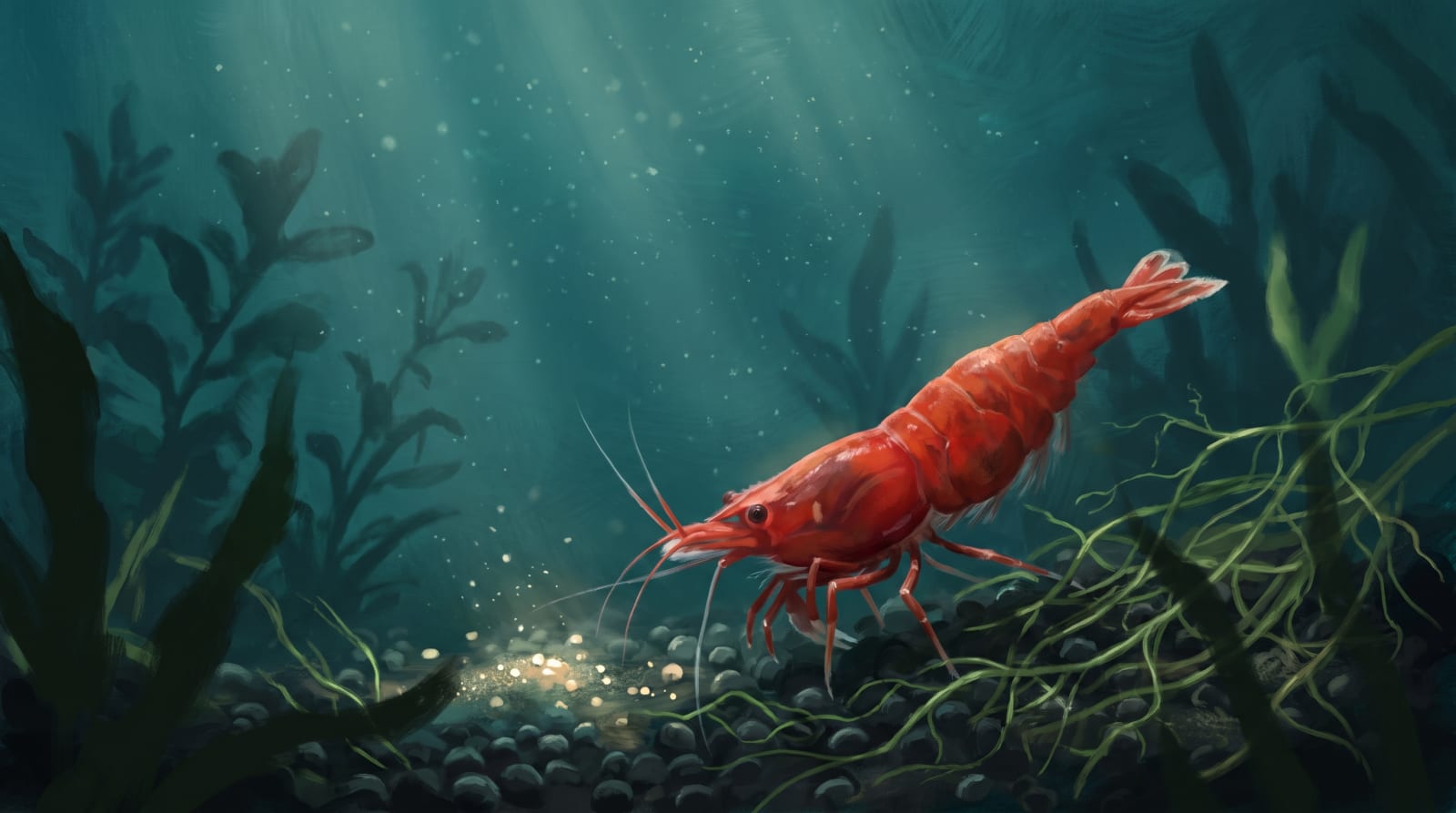
For Neocaridina in most of Britain, the right substrate is the boring one: plain inert sand or fine gravel. The bags of dark "active" aquasoil that dominate the shelves are built for a different shrimp entirely, and under cherries in typical UK tap water they cost more, wear out, and pull your water the wrong way. The one thing substrate genuinely does for your shrimp is cosmetic — worth getting right — so we'll cover that too, but the headline is simple. Cherries want inert.
Inert vs active: what the two types actually do
Every substrate a shrimp keeper looks at falls into one of two camps, and the difference is entirely about what it does to your water.
Inert substrate — aquarium sand, fine gravel, inert granulates — is chemically inert, which is the whole point. It doesn't change your water at all. It's there to hold plant roots, look good, and grow the film of biofilm that shrimp graze off every surface. Whatever your tap water is when it goes in, an inert substrate leaves it exactly that way.
Active, or buffering, substrate is the opposite by design. These are the dark "aquasoils" and "shrimp soils", and they're packed with compounds that actively pull pH and general hardness down, holding the water soft and acidic. That isn't a side effect to manage around — it's the entire selling point, and it exists for one group of shrimp: Caridina.
| Inert substrate | Active (buffering) soil | |
|---|---|---|
| Examples | Sand, fine gravel, inert granulate | Dark aquasoil / "shrimp soil" |
| Effect on water | None — your tap stays as it is | Lowers pH and GH; softens the water |
| Made for | Neocaridina, and hard-water tanks generally | Caridina — crystal reds, bees |
| Lifespan | Effectively permanent | Buffering exhausts; eventually needs replacing |
| Cost | Cheap | Several times the price |
Why inert wins for Neocaridina in UK water
Cherries want GH 6–12 and a pH anywhere from 6.8–7.6, with stability mattering more than the exact figure — the full picture is in our Neocaridina water parameters guide. Most UK tap water already sits in or above that band. Across the South East it runs hard, with GH often 12–18 or higher and London averaging around 260ppm, which is the high side of ideal but perfectly fine for cherries once dechlorinated. Your own supply is covered region by region in the UK tap water guide.
Put active soil under that hard tap water and you set up a tug-of-war. The soil pulls hardness and pH down; your hard tap, topped up with every water change, pushes them back up. The soil burns through its buffering capacity fast fighting a battle you never needed to start, and along the way you get the drifting, changing parameters that cherries like least. You've effectively paid a premium to destabilise your own tank.
Inert substrate sidesteps the whole thing. Your water is whatever your tap — plus a remineraliser, if you're in a soft area — makes it, and it stays put, which is exactly the steadiness cherries reward. There's no buffering to exhaust and no rescape looming when it does. You set it up once and stop thinking about it.
When active substrate actually makes sense
There are two honest cases for it, and only one is common. The first is that you're keeping Caridina rather than Neocaridina — crystal reds, bees, taiwan bees — which need genuinely soft, acidic water that active soil is designed to deliver. That's a different animal on a different care sheet, and the whole split is laid out in our Neocaridina vs Caridina guide. If cherries are your shrimp, that reason doesn't apply to you.
The second is more marginal: you're in a very hard-water area and want to soften deliberately for a specific project. Active soil is one way to do that, but for plain cherries it's solving a problem you don't have — hard water builds good shells. If you do need to bring soft-region water up to spec instead, the cheaper and far more controllable route is inert substrate plus a remineraliser dosed to a target, which we cover in remineralising RO and rainwater.
Sand or gravel? Both work
Among inert options, the choice comes down to looks and planting rather than shrimp health. Fine gravel and aquarium sand both keep cherries perfectly well.
Sand gives a natural, tidy look and keeps food and mulm sitting on the surface where shrimp and snails can reach it, though a very fine sand can pack down over time. Gravel lets waste settle into the gaps between grains, which is no problem at all as long as you aren't burying uneaten food down there to rot. Avoid only the two extremes: a sand so fine it seals into an airless layer, and a coarse, chunky gravel with holes big enough to swallow shrimplets and food. A grain a couple of millimetres across is the easy middle ground. And ignore the old myth that shrimp cut themselves on sharp substrate — they don't, though a smooth grain is kinder on your hands come cleaning time.
Dark substrate and colour: the one real upgrade
Here's the thing substrate genuinely changes: how your shrimp look. Cherries, like most animals, adjust their depth of colour to their surroundings. Over pale sand a red cherry lightens down to blend in; over a dark substrate the very same shrimp deepens up and reads far richer. It's the single biggest cosmetic lever in the tank, and it's free.
A group of red cherries over dark substrate is a completely different photograph from the same shrimp over white gravel, and every deeply coloured line looks better for it. If your shrimp seem washed out, substrate is one of the first things to check before you start worrying about their health — the full list of causes is in why shrimp lose colour. Just keep it in proportion: this is presentation, not care. A shrimp on pale gravel is every bit as healthy as one on black sand. It's simply more modestly dressed.
Setting it up: keep it shallow, and don't deep-clean it
However you go, keep the bed shallow — enough to anchor your plant roots and no deeper. A thick layer of fine substrate can turn anaerobic in dead spots, and a shallow inert layer sidesteps that while being easier to keep tidy. Whichever grain you choose, rinse it well before it goes in: even "pre-washed" sand and gravel carry a fine dust that will cloud a new tank for days if you skip it. The complete build, substrate and all, is walked through step by step in our shrimp tank setup guide.
One honest aside: you don't strictly need substrate at all. Plenty of breeders run bare-bottom tanks for the colonies they watch most closely, because bare glass is the easiest surface in the hobby to keep spotless — every scrap of uneaten food shows up and siphons out in seconds. The trade is less surface for biofilm and nowhere to root plants, so bare-bottom tanks lean harder on sponge filters, moss and botanicals to feed and shelter the shrimp. For a display tank you'll almost always want substrate; for a dedicated breeding rack, bare glass is a perfectly fair choice.
The one rule that trips people up is not to deep-clean it. The mulm and biofilm sitting in and on the substrate is food and filtration working together, and a mature shrimp substrate crawling with life is doing its job. Skip the deep gravel-vac beyond a light surface siphon at water-change time. Left alone, an inert bed will outlast the tank itself.
FAQ
What is the best substrate for cherry shrimp?
For Neocaridina in typical UK water, plain inert substrate — fine gravel or aquarium sand — is the best choice. It keeps your water where it already is, costs little, never needs replacing, and grows the biofilm shrimp graze all day. Dark shades show colour best. Active buffering soils are built to soften water for Caridina and are usually counterproductive under cherries, which thrive in the harder water most UK taps already provide.
Can you keep cherry shrimp on sand?
Yes — sand is one of the two standard inert options, and cherries do well on it. It looks natural, keeps food and waste up on the surface where shrimp and snails can reach it, and grows biofilm like any other substrate. Choose an aquarium sand that isn't so fine it compacts into an airless layer, keep the bed shallow, and don't bury uneaten food where it can foul the water.
Do cherry shrimp need active or buffering substrate?
No. Active substrate lowers pH and hardness for Caridina shrimp, which need soft, acidic water. Neocaridina want the opposite — GH 6–12 and a stable, near-neutral to slightly alkaline pH — which most UK tap water already delivers. Putting cherries on active soil means paying more for a substrate that fights your water and eventually exhausts its buffering. Inert sand or gravel is cheaper, simpler and far better matched to them.
Does dark substrate make cherry shrimp more colourful?
It makes them look more colourful, which amounts to the same thing to your eye. Shrimp adjust their colour depth to their background: over dark substrate they deepen and read richer, over pale sand they lighten to blend in. It's a cosmetic effect rather than a health one — a shrimp on pale gravel is just as healthy — but if you want the deepest reds or blues, a dark substrate is the easiest free upgrade available.
Is aquarium soil bad for cherry shrimp?
Not bad, just usually pointless and often counterproductive. Aquasoil actively softens and acidifies the water to suit Caridina, and cherries prefer the harder, steadier water most UK taps give, so the soil works against you and burns out its buffering over time. If you already have a soil tank running stably, cherries can live in it happily enough — but for a new cherry setup, inert substrate is the simpler, cheaper and more stable pick.