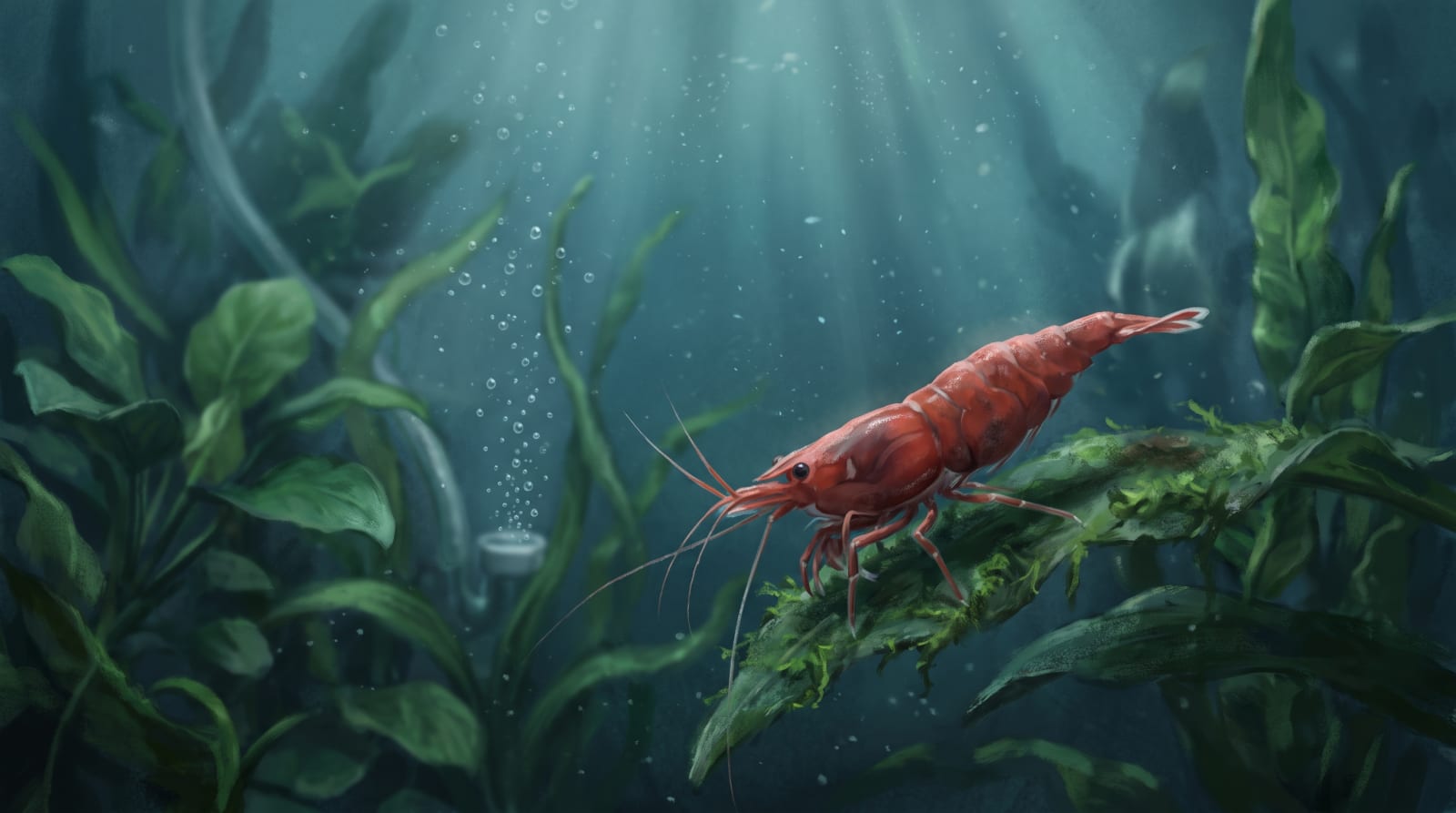
The copper question stops more shrimp keepers from dosing fertiliser than anything else, so let's settle it first. Yes, quality planted-tank fertilisers are safe to use with cherry shrimp. The copper they contain is a trace amount, chelated — locked to a carrier molecule — and dosed in micrograms as a plant micronutrient. That is nothing like the free copper in a fish medication, which is what actually wipes colonies out. The genuine risks with ferts and CO2 aren't the copper at all; they're overdosing, and the pH swings a badly run CO2 system throws.
Are fertilisers shrimp safe? The copper question
Start with a fact that reframes the whole worry: shrimp themselves run on copper. Their blood carries oxygen using haemocyanin, a copper-based molecule, the way our blood uses iron. So trace copper isn't some alien poison to an invertebrate — it's the dose and the form that decide whether it feeds a plant or kills a shrimp.
A quality plant fertiliser carries a whisker of chelated copper because plants need it as a micronutrient. It's bound, tiny, and taken up as the plants grow. A copper-based medication, an algaecide, or some snail treatments deliver free ionic copper at many times that level, and that is the version that kills shrimp. The distinction is the entire safety story: trace chelated copper in a proper fertiliser is fine; copper meds are never safe in a shrimp tank. Our guide to copper and shrimp has the full list of sources and why the chelated trace is harmless, and it's worth reading alongside what you must never dose around shrimp.
So the copper in fertiliser question has a clean answer: use products made for planted aquariums, dose them sensibly, and copper is a non-issue. Where people come unstuck is the "dose them sensibly" part.
Dose lean: a shrimp tank wants less, not more
Most shrimp tanks are low-tech — modest light, easy plants, no CO2 — and low-tech plants need very little feeding. The safe habit is to dose lean. Start at half the label dose of an all-in-one liquid, watch the plants, and only nudge it up if they show real deficiency: pale new growth, pinholes in leaves, stalled growth. The plants that suit shrimp tanks are slow, undemanding species, and slow plants can't use a big dose anyway.
Overdosing doesn't help plants that aren't lit or carbonated enough to use the nutrients; the surplus just feeds algae and pushes TDS upward. Since stability is what keeps shrimp alive, a steady small dose beats an enthusiastic big one every time — the reasoning is the same one behind every number in our Neocaridina water parameters guide. Dosing fertiliser with shrimp is less about the perfect formula and more about restraint.
Know when to dose nothing at all, too. A tank of anubias, moss and a floating plant, lit modestly, may want no fertiliser for weeks — the fish food and shrimp waste already supply enough. If the plants are green and growing and the water's clear, leave the bottle on the shelf and reach for it only when new growth pales or stalls, not on a schedule for its own sake. The clearest signs you've gone too far are the tank telling you: a bloom of algae on the glass and hardscape, and TDS creeping up between water changes.
The three ways to feed a planted shrimp tank
All-in-one liquids are the simplest option and the right one for most shrimp tanks: a single bottle of combined macro and micro nutrients, dosed a few times a week. Halve the label dose to begin with and adjust from what the plants tell you. If you keep the low-tech roster from our best plants for shrimp tanks, this is all you'll ever need.
Root tabs are capsules pushed into the substrate for root-feeders like crypts and swords. They release under the surface and barely touch the water column, so they're low-risk around shrimp — just don't tear one open in open water. A tank planted with moss, anubias and java fern (all water-column feeders that grip hardscape rather than root) won't need them at all.
Dry salts, dosed by the Estimative Index method, mean weighing individual nutrient salts for full control. It suits high-tech tanks but is more than a low-tech shrimp tank needs, and classic EI's rhythm — estimate high, then reset with a large weekly water change — runs against the small, gentle changes shrimp prefer. If you do dose dry salts over shrimp, dose leaner than the standard EI figures and keep your water changes modest and temperature-matched rather than big and abrupt.
CO2 in a shrimp tank: fine when it's stable
Injected CO2 is not poisonous to shrimp at normal planted-tank levels, and plenty of beautiful high-tech tanks house thriving colonies. The danger is indirect. CO2 dissolves into carbonic acid and pulls pH down while it's running, then pH drifts back up overnight once it switches off. Tuned well, that's a small, slow, repeatable daily shift the shrimp barely register. Tuned badly — a cylinder dumping gas, a solenoid with no timer, wild day-to-night pH lurches — it becomes exactly the kind of swing that triggers failed moults and deaths.
If you run a CO2 shrimp tank, a few habits keep it safe. Put the gas on a timer that starts an hour or two after lights-on and stops before lights-off. Tune it up slowly over days, judging by a drop checker rather than chasing a single number. And keep good surface movement, or an air stone running at night, because both CO2 and warm water lower the oxygen shrimp depend on. Modest and stable is the whole game.
There's a UK angle worth knowing here. The pH swing from CO2 is buffered by KH, the carbonate hardness, and much of the country runs hard tap water with plenty of it. A tank sitting in the KH 2–8 range we aim for absorbs the daily CO2 shift far more gently than a soft, low-KH tank, where the same gas can send pH lurching. If you're in a soft-water area and set on CO2, go gentler still and lean hard on stability.
The honest truth, though: most shrimp keepers never run CO2 and never miss it. The easy plants that suit shrimp tanks — mosses, anubias, ferns, floaters — grow perfectly well without it. CO2 is for aquascapes that happen to house shrimp, not something a shrimp colony needs.
Liquid carbon and glutaraldehyde: the careful one
Liquid carbon — the "liquid CO2" products based on glutaraldehyde — earns its own warning. Some keepers use it as a mild carbon source and, more often, as a spot-treatment for algae, syringed onto problem patches. It works, but it has a narrow safety margin around invertebrates. At or near the recommended dose it can stress shrimp, and overdosing harms them outright, so a liquid carbon shrimp tank is one to run with a careful hand and never a heavy one.
It also melts some plants — several mosses and vallisneria among them — which matters when moss is your shrimplet nursery, as our moss guide explains. If you use it, dose conservatively and strictly to the product's instructions, never above them. To clear algae, spot-dose the affected area with the filter and pumps off for a few minutes rather than raising the whole tank's dose. And if you'd rather not risk it, plenty of shrimp keepers skip liquid carbon entirely — that's a perfectly safe call.
The low-tech shrimp tank, in one line
For most colonies the whole question resolves to this: easy plants, a lean all-in-one liquid a couple of times a week if the plants ask for it, no CO2, and liquid carbon only with a careful hand. The elaborate high-tech kit is for display aquascapes that happen to contain shrimp, not for shrimp tanks. If you're still deciding whether to plant at all, we make the case in do shrimp need live plants.
FAQ
Are fertilisers safe for shrimp?
Yes, when they're made for planted aquariums and dosed sensibly. The copper such fertilisers contain is a trace, chelated amount meant as a plant micronutrient — harmless to shrimp, and nothing like the free copper in medications, which is lethal. Dose lean, start at half the label rate, and the fertiliser itself poses no threat to a colony.
Is the copper in fertiliser dangerous to shrimp?
No, not the trace chelated copper in a quality plant fertiliser. It's bound to a carrier molecule, dosed in micrograms, and taken up by the plants — shrimp even use copper in their own blood. The copper that kills shrimp comes from copper-based medications, algaecides and some snail treatments, which deliver free ionic copper at far higher levels. Fertiliser copper and medication copper are not the same risk.
Can I use CO2 in a shrimp tank?
Yes, as long as it's stable and modest. Injected CO2 isn't toxic to shrimp at planted-tank levels; the risk is the pH swing an erratic system causes as it turns on and off. Put it on a timer, tune it up slowly with a drop checker, and keep good surface movement or night-time aeration. Most shrimp keepers, though, run easy plants and skip CO2 altogether.
Is liquid carbon safe for shrimp?
With caution. Liquid carbon (glutaraldehyde) has a narrow safety margin around invertebrates, so it can stress or kill shrimp if overdosed, and it melts some mosses and vallisneria. If you use it, dose conservatively and never above the product's stated rate, and spot-treat algae with the pumps off rather than dosing the whole tank heavily. Many shrimp keepers avoid it entirely, which is a safe choice.