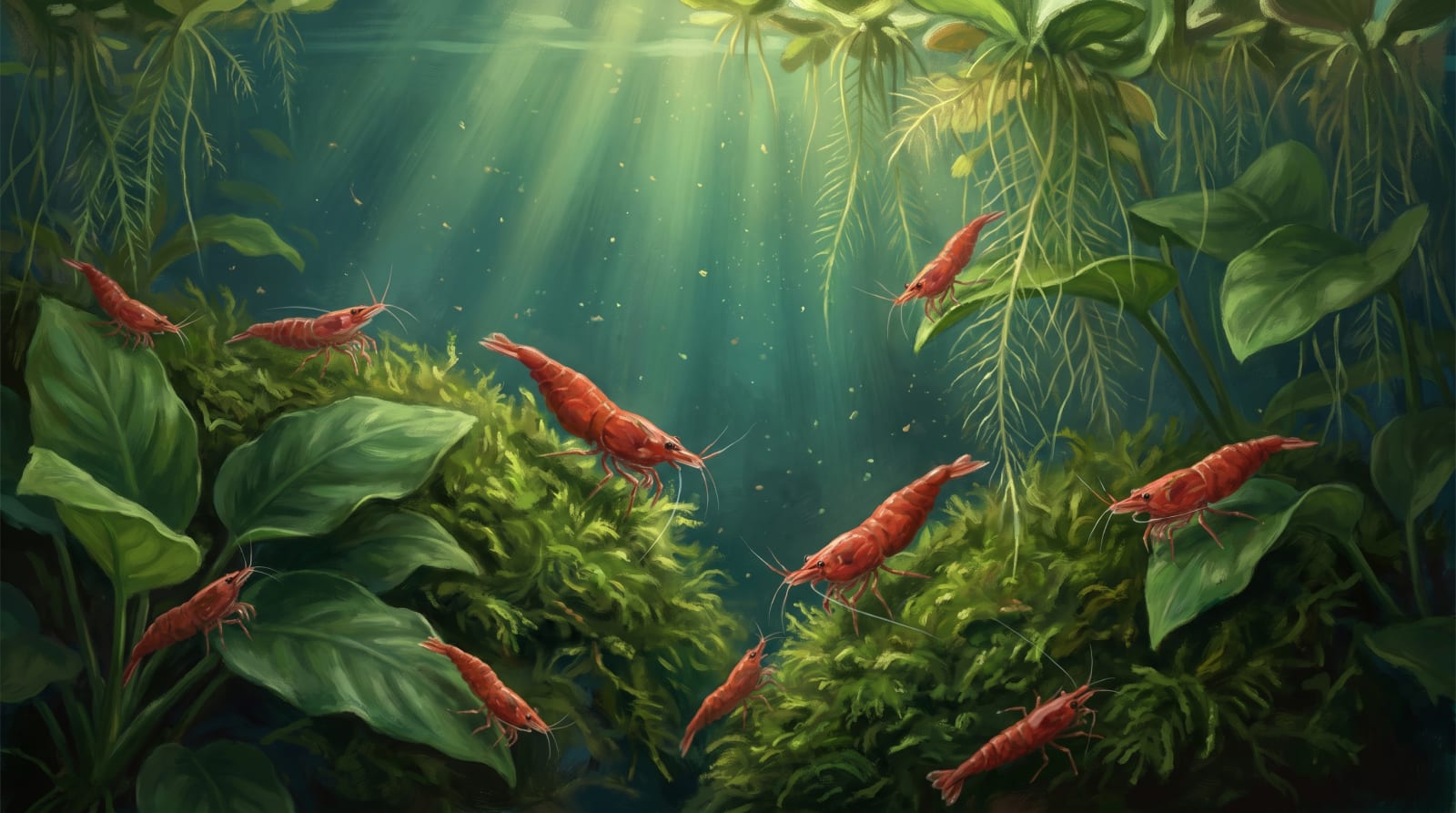
Ask us for the best plants for cherry shrimp and you'll get a short list and no hesitation: moss, anubias, java fern, bucephalandra, crypts and a handful of floaters. Every one of them grows in low light with no CO2, in exactly the water Neocaridina want, and every one earns its place by doing a job for the colony rather than just filling the glass. This is the roster our own breeding room runs on, and the reasoning behind it.
What makes a plant good for a shrimp tank
A shrimp tank asks different questions of a plant than a fish-first aquarium does. We judge every candidate on three jobs.
Grazing surface. Biofilm — the thin living film of bacteria, algae and microorganisms that coats every submerged surface — is the primary diet of cherry shrimp, and plants are where most of it grows. More leaf area means more food, around the clock, without you lifting a finger. If biofilm is a new idea, the invisible buffet explains why it matters more than anything in a tub.
Cover. Shrimplets are 1–2mm at hatch and spend their first weeks hiding. Dense planting is the difference between a colony that grows and a tank where berried females never seem to produce anything; the case for cover is the whole argument of our raising shrimplets guide.
Ease. Cherry shrimp want stable, moderately hard water and hate sudden change. That rules out nothing on this list and everything that needs daily fiddling. None of these plants needs CO2 — and that's a feature, not a compromise, because a badly run CO2 system swings pH, and swings are what kill shrimp. A low-tech shrimp tank is the easy kind to keep stable.
One reassurance before the roster. Practically every common aquarium plant is shrimp-safe as a species: cherries graze surfaces, they don't eat healthy leaves. The real safety question is what the plant was sprayed with before it reached you, and we deal with that properly near the end.
The roster at a glance
| Plant | The job it does | Light | Growth |
|---|---|---|---|
| Mosses | Nursery, grazing surface, food trap | Low | Slow–medium |
| Anubias | Broad grazing platforms, shade | Low | Slow |
| Java fern | Midground bulk and cover | Low | Slow |
| Bucephalandra | Dark, dense grazing foliage | Low | Very slow |
| Cryptocorynes | Rooted cover at shrimp level | Low | Medium, slow to settle |
| Floating plants | Overhead shade, root curtains | Any | Fast |
Mosses: the one category you can't skip
If we could plant only one thing in a shrimp tank, it would be moss, and it wouldn't be close. A moss thicket holds more biofilm than any other plant, traps food particles where shrimplets can reach them, gives berried females somewhere to sit out the wait, and hides freshly moulted shrimp through the soft 24–48 hours when they want to disappear. Every breeding tank in our room carries a fist of it at minimum.
Java moss is the workhorse: cheap, indestructible, happy tied to wood or left to mound on the substrate. Christmas moss grows neater fronds if you want structure, flame moss grows upright like green fire, and weeping moss drapes beautifully off hardscape. They all do the same job for the shrimp, so choose on looks; the full comparison is in the moss guide.
Colour is the bonus. Shrimp read best against deep green, and a yellow fire line grazing over dark moss is the cheapest lighting upgrade we know.
Anubias: the grazing platform
Anubias is a slow, broad-leaved epiphyte that asks for almost nothing and repays you with the best grazing platforms in the hobby. Those thick leaves live for years, and the older a leaf gets, the better the biofilm crop it carries — watch a shrimp work an old anubias leaf and you're watching it eat dinner off a plate. The shaded space underneath becomes a natural hide.
Two rules. First, never bury the rhizome — the thick horizontal stem the leaves grow from — or it rots; tie or wedge the plant onto wood or rock instead. Second, buy the size you want on day one, because "slow" undersells it. The small nana forms suit nano tanks perfectly.
Java fern: bulk cover for nothing
Java fern is how you fill the midground of a shrimp tank without spending much or maintaining anything. It's tough, it grows in whatever light you have, and like anubias it attaches to hardscape rather than rooting, so the rhizome stays out of the substrate. Narrow-leaf forms exist if the standard leaves feel too coarse for a small tank.
Its party trick suits shrimp keepers on a budget: mature leaves sprout plantlets at their tips, which you can pull off and attach elsewhere. One healthy fern quietly becomes five, and every new leaf is another grazing surface. In our experience it's also one of the most forgiving plants in a newly set-up tank, which is exactly when you want greenery working for you.
Bucephalandra: the slow, dark luxury
Bucephalandra is the premium pick of the roster: an epiphyte like anubias, slower still, with dense, dark, often iridescent leaves that make bright shrimp look show-grade. It grows attached to wood or rock, takes low light, and holds biofilm beautifully on those textured leaves.
The honest caveats are pace and price. Buce grows so slowly that a scape built from it changes over years, not months, and good pieces cost more than the rest of this list. The consolation is that a small piece goes a long way, and it's very hard to kill. It's also commonly sold in tissue-culture pots, which — as we'll get to — is the safest format you can buy a plant in.
Cryptocorynes: rooted cover that stays put
Everything above attaches to hardscape; crypts are the rooted exception we rate for shrimp. Cryptocoryne wendtii gives you a rosette of leaves right at shrimp level, parva stays small enough for the foreground of a nano tank, and both grow happily in plain inert substrate — a root tab underneath helps but isn't essential.
Know about crypt melt before you plant them. Moved or replanted crypts often dissolve their leaves within days, which looks like death and isn't: the roots live, and new leaves suited to your water grow back over the following weeks. Don't bin a melted crypt and don't panic-change the water. Once settled, they're as undemanding as anything here, and the low canopy they form is prime shrimplet country. The odd dying lower leaf can stay put — the colony will graze it down.
Floating plants: cover from above
Floaters are the fastest way to make a shrimp colony feel safe. Frogbit, salvinia and red root floater all work: their dangling roots grow a curtain of biofilm that shrimplets graze and hide in, their shade takes the edge off bright lighting, and because they sit at the surface with their leaves in the air, they grow fast and pull nitrate hard between water changes — useful when you're holding nitrate under 20ppm.
You'll notice behaviour change too. Under floater shade our colonies graze more boldly in open water rather than keeping to the edges. Corral floaters with a ring of airline tubing if you want part of the surface clear for feeding and light-hungry plants below; left alone they will claim the lot. The full species rundown, and how to stop floaters becoming the whole hobby, is in floating plants for shrimp tanks.
One warning by name: duckweed. It does everything frogbit does, and you will never, ever get rid of it. We don't let it in the building.
Planting for a breeding colony
If you're choosing plants for shrimp breeding specifically, stack the deck vertically. Moss thickets low down are the nursery. Crypts and ferns give cover at mid height. A floater curtain closes the top. Add a catappa leaf or an alder cone or two on the substrate as slow-release biofilm stations, and a shrimplet can spend its whole first month grazing without crossing open ground.
That layered cover is the single biggest survival lever available to a breeder. Same shrimp, same water, same food: the heavily planted tank raises several times more of every brood, because in a sparse tank shrimplets get picked off, sucked up or simply outcompeted before they reach size.
What we'd skip
Carpet plants. The lawn look wants CO2 and strong light — precisely the high-energy setup a shrimp tank doesn't need — and most attempts without them grow patchy and sad. There are slow no-CO2 routes to a green floor, and we've written up the ones that actually work in carpet plants in shrimp tanks, but as a beginner move it's all risk and no reward.
High-light stem plants. Fast-growing stems are brilliant nutrient sponges, but the demanding ones want ferts, light and constant replanting — and repeatedly uprooting stems in an established tank is exactly the disturbance a colony hates.
Plastic plants. Honestly assessed: they provide cover and they're better than a bare tank. But they grow no biofilm, they feed nobody, and a tank full of them needs more supplementary feeding to compensate. Live plants are cheap; buy the real thing.
The pesticide rule: treat every new plant as suspect
Now the safety point we flagged at the start. The plants themselves are shrimp-safe; the pesticide residue on farm-grown stock is not, and it's one of the classic causes of a sudden, otherwise unexplainable colony wipeout. Plants grown emersed on big commercial farms are routinely treated, the residue survives the journey to your local shop, and shrimp are far more sensitive to it than any fish.
The safe route, in order of preference. Buy tissue-culture (in-vitro) pots where you can: sterile-grown, pesticide-free, and shrimplet-safe on day one. Otherwise rinse new plants hard and quarantine them in a plant-only bucket or spare tank for a week or two, changing the water every few days, before anything goes near the colony. Dips exist for the impatient, and we cover the honest versions — with their plant-damage trade-offs — in preparing new plants.
While we're on chemistry: the trace copper in a quality aquarium fertiliser at normal dose is fine with shrimp. Lean dosing in a low-tech tank is all these plants need, and most of ours get nothing but light and fish-free patience.
Putting the roster together
A last word on arrangement, because the same six plants can make a dozen different tanks. Moss carpeting the floor of a breeder box is one look; buce and weeping moss on dark wood under a frogbit ceiling is another entirely. We've laid out five complete shrimp-first layouts, from minimal to jungle, in our aquascaping ideas for shrimp tanks — every one of them builds from this list.
FAQ
What are the best plants for cherry shrimp?
Moss, in any species, is the single best plant for cherry shrimp — maximum biofilm, maximum shrimplet cover. Around it we'd add anubias and java fern for tough grazing platforms, bucephalandra if the budget stretches, crypts for rooted cover, and a floating plant like frogbit for shade and root curtains. All of them thrive in low light with no CO2, in the same stable, moderately hard water the shrimp want.
Are aquarium plants safe for shrimp?
The species are safe — cherry shrimp graze plant surfaces rather than eating healthy leaves, so nothing commonly sold will poison them by nature. The danger is pesticide residue on farm-grown plants, which kills shrimp reliably. Buy tissue-culture pots where possible, and rinse and quarantine everything else for a week or two before it goes in the tank.
Do shrimp tanks need CO2?
No. Every plant on this list — mosses, anubias, java fern, bucephalandra, crypts, floaters — grows without injected CO2 in ordinary light. CO2 isn't directly harmful to shrimp when run steadily, but an erratic system swings pH, and stability matters more to Neocaridina than lush growth. A low-tech planted tank is the easier tank to keep stable, which is why we run nothing else.
Will cherry shrimp eat my plants?
No — what looks like eating is grazing. Shrimp work over leaf surfaces for biofilm and algae all day, which actually keeps plants cleaner. They will eat decaying plant matter, so a melting crypt leaf or softened catappa leaf gets processed down to a skeleton, but healthy growth is safe. If a plant is being genuinely eaten, look for a snail or reconsider the "shrimp".
Can you have too many plants in a shrimp tank?
Practically, no. Colonies do best in tanks most people would call overgrown: more grazing surface, more cover, more stable water. The only real limits are dense floater mats blocking so much light that plants below fail, and losing sight of the shrimp entirely. Trim for your own viewing pleasure — the shrimp would happily keep the jungle.