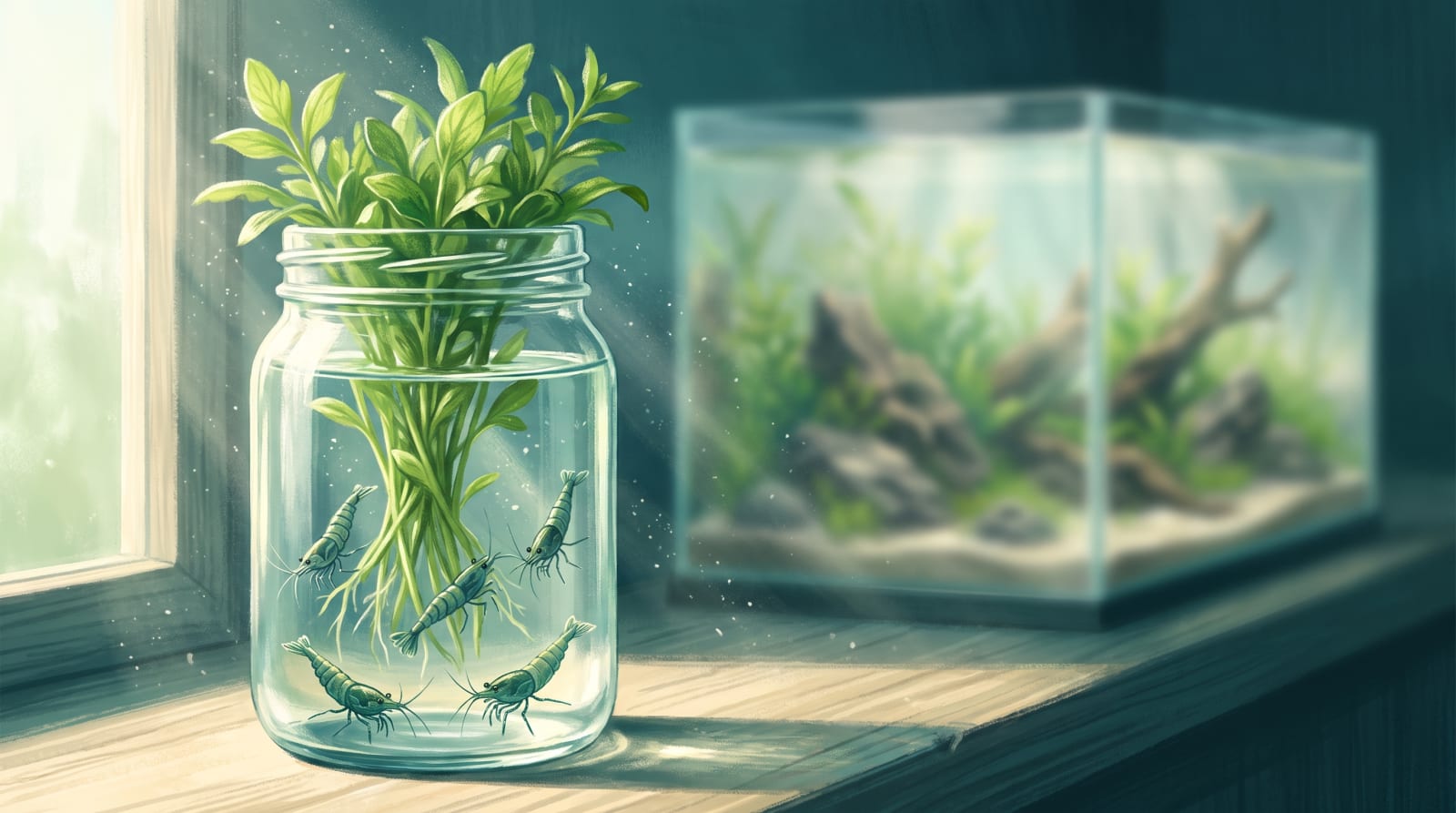
More first colonies die to a bag of new plants than to almost anything else, and the keeper never sees it coming. The plants look perfect, the water tests clean, and within a day or two the shrimp are twitching, dropping off the glass and dying in ones and twos. The culprit is pesticide, sprayed on the plant at the nursery long before it reached the shop. This guide covers how we prepare every new plant so that never happens.
Why new plants kill shrimp
Commercial aquarium plants are grown on farms, often emersed — out of water, in huge greenhouses — before they're trimmed and shipped to shops. To move that stock clean and pest-free, growers treat it with pesticides and snail-killing chemicals. Those treatments do their job on the farm and mostly wash off in transit, but the traces that remain are the problem, because they are lethal to invertebrates at doses far too small to see or test for.
This is the cruel twist that catches fish keepers moving into shrimp. A planted tank of tetras will never notice plant pesticide; fish simply aren't sensitive to it. Shrimp, snails and every other invertebrate are, and a residue that a fish shrugs off is enough to wipe a shrimp colony overnight. It doesn't matter whether your tank holds a few cull shrimp or a colony of high-grade red cherries — pesticide doesn't discriminate. It sits alongside copper as an invisible killer that no liquid test kit will ever warn you about, which is exactly why new plants are one of the first entries on our why-are-my-shrimp-dying checklist.
The specific chemicals vary. Some are broad insecticides, some are snail treatments, and some hide behind an "invert-safe" label that turns out not to be. You can't know which your plant carries, and you can't fully rely on a shop's word, so the only safe assumption is that any untreated new plant is suspect until you've dealt with it.
In-vitro plants: the safest route
The cleanest way to sidestep the whole problem is to buy in-vitro, or tissue-culture, plants. These are grown from a few cells in sealed sterile pots, in a nutrient gel, in laboratory conditions — no pesticides, no snails, no algae, no pond pests of any kind. You peel back the lid, rinse the gel off the roots under the tap, and plant. We use them wherever we can, and especially for a brand-new shrimp tank where there's no established colony to absorb a mistake.
The trade-offs are honest ones. In-vitro portions are small: you're buying a cluster of tiny plantlets rather than one big established plant, so they take longer to fill a tank. The range of species sold this way is narrower, and they cost a little more per pot. For carpeting plants and most stems the format is common and well worth it. For large anubias, ferns and mosses you'll often still be buying potted or loose plants — and when you do, you're back to preparing them yourself.
Rinse hard, then quarantine
For any plant that isn't in-vitro, our default isn't a dip at all. It's a rinse and a wait. Under a cold running tap we rinse every leaf and root thoroughly, working the water through mosses and dense growth with our fingers. That alone shifts a lot of surface residue, along with any snails, eggs and loose muck riding in on the plant.
Then the plant goes into quarantine: a plain bucket or a spare tank of dechlorinated water, a bit of light, and crucially no shrimp. We leave new plants there for one to two weeks, changing the water every few days. Two useful things happen in that time. Any pesticide bound to the plant leaches out and is diluted away with each change, and the plant grows fresh, untreated tissue. What finally goes into the shrimp tank is far safer than what came out of the bag.
Quarantine beats dips for one simple reason: a dip only cleans the surface, but some pesticides are absorbed into the plant's tissue, where no rinse or dip can reach. Only time and new growth clear those. If you keep a quarantine bucket ticking over, you can even drop a canary into it — a spare ramshorn snail, or a couple of cull shrimp you can afford to lose. If they're grazing happily after a week, the plants are safe for the main tank. It's the same logic behind quarantining new shrimp, and it costs almost nothing.
Mosses and dense carpets deserve extra patience. They trap residue deep in their structure and are nearly impossible to rinse fully, so we quarantine those longer and never bleach-dip them. There's more on choosing and handling them in our moss guide.
Plant dips: bleach and alum
Sometimes you want a plant in the tank this week, not next fortnight. That's where dips come in. They're faster than quarantine and far better than nothing, but they carry two caveats worth stating plainly: they can damage or kill delicate plants, and they only tackle surface residue. We treat a dip as a head start on quarantine, not a replacement for it.
Bleach dip. Plain, unscented household bleach, one part to twenty parts water — a 1:20 dilution. Dip hardy plants only, meaning anubias, java fern and similarly tough species, for no more than two minutes, agitating gently. Then rinse under running water and soak the plant in a bucket of heavily dechlorinated water for a good while before planting, so the dechlorinator neutralises any last traces. Bleach strips algae and pests as well as loosening residue, which is a bonus on a plant that's arrived with hitchhikers. It will melt mosses, buce, delicate stems and carpeting plants, so for anything soft, quarantine instead.
Alum soak. Alum — aluminium sulphate — is the gentler chemical option, and the one we'd reach for on plants too soft to bleach. Dissolve it in a container of water, soak the plants for a few hours up to overnight, then rinse well. It's kinder to leaves than bleach and good at shifting snail eggs, but slower and less aggressive on pesticide itself. Recipes and pack strengths vary, so follow the dose on the product rather than a number half-remembered from a forum. Alum isn't always easy to find on the high street either, which is part of why we lean on plain quarantine most of the time.
Whichever dip you use, rinse thoroughly afterwards and, ideally, still give the plant a few days in clean water before it meets your shrimp. A dip plus a short quarantine is belt-and-braces, and it's what we do with anything going into a tank we care about.
The pests that ride in with plants
Pesticide is the headline risk, but it isn't the only thing that arrives on a new plant. Snails and their eggs are near-universal — often harmless ramshorns and bladder snails, occasionally something you'd rather not introduce — and dense growth can carry pest algae and the odd hitchhiking planarian or hydra. The good news is that the same routine handles the lot. A hard rinse dislodges most of it, and a one-to-two-week quarantine gives anything you missed time to show itself before it reaches the shrimp.
If a bloom of planaria or hydra does turn up later, it's usually feeding that's driving it rather than the plants, but starting clean is one less thing to chase down. A bleach dip has the side benefit of killing snails and eggs outright, which is why some keepers reach for it purely as pest control on hardy plants, quite apart from the pesticide question.
The routine that's never cost us a shrimp
Put together, our plant-prep routine is dull and reliable. Buy in-vitro when the plant's sold that way. For everything else, rinse hard under the tap, then quarantine for one to two weeks in dechlorinated water with regular changes and, if you like, a canary snail. Add a bleach or alum dip on top only if the plant is hardy and you're genuinely in a hurry. It's boring, and boring is the point — we haven't lost shrimp to a new plant in years.
None of this replaces buying from sellers who understand invertebrates in the first place. More shops now stock plants labelled shrimp- or invert-safe, grown without the problem chemicals, and those are worth seeking out; the same care shows up when you're sourcing plants for an aquascape built around shrimp. But "safe" on a sticker has burned enough keepers that we still quarantine even then. Trust the routine, not the label.
FAQ
Can new plants kill cherry shrimp?
Yes, and they're one of the most common causes of a sudden colony wipe-out. Farm-grown aquarium plants are often treated with pesticides and snail-killers that are harmless to fish but lethal to shrimp and other invertebrates in trace amounts you can't see or test for. Preparing plants properly — in-vitro pots, or a hard rinse plus one to two weeks' quarantine — removes the risk before it ever reaches your tank.
How do you get pesticides off aquarium plants?
Rinse thoroughly under a cold tap, then quarantine the plant for one to two weeks in dechlorinated, shrimp-free water, changing the water every few days so any residue leaches out and dilutes away. For hardy plants in a hurry, a bleach dip at 1:20 for under two minutes, or a longer alum soak, helps shift surface residue. Neither reaches pesticide absorbed into the plant tissue, though, which is why we rely on quarantine.
Are in-vitro plants safe for shrimp?
They're the safest plants you can buy. In-vitro, or tissue-culture, plants are grown in sealed sterile pots in a nutrient gel, with no pesticides, snails or algae, so they can go almost straight into a shrimp tank after a quick rinse of the gel off the roots. The catch is small portions and a narrower choice of species, so you'll still prepare potted or loose plants the traditional way for anything not sold in-vitro.
Do I need to quarantine plants if I dip them?
Ideally, yes. A dip only cleans the surface, while some pesticides sit inside the plant's tissue where no dip can reach, and only time and new growth clear those. We treat a bleach or alum dip as a head start, then still give the plant a few days to a week in clean, dechlorinated water before it goes near shrimp. A dip plus a short quarantine is the belt-and-braces approach for any tank you care about.