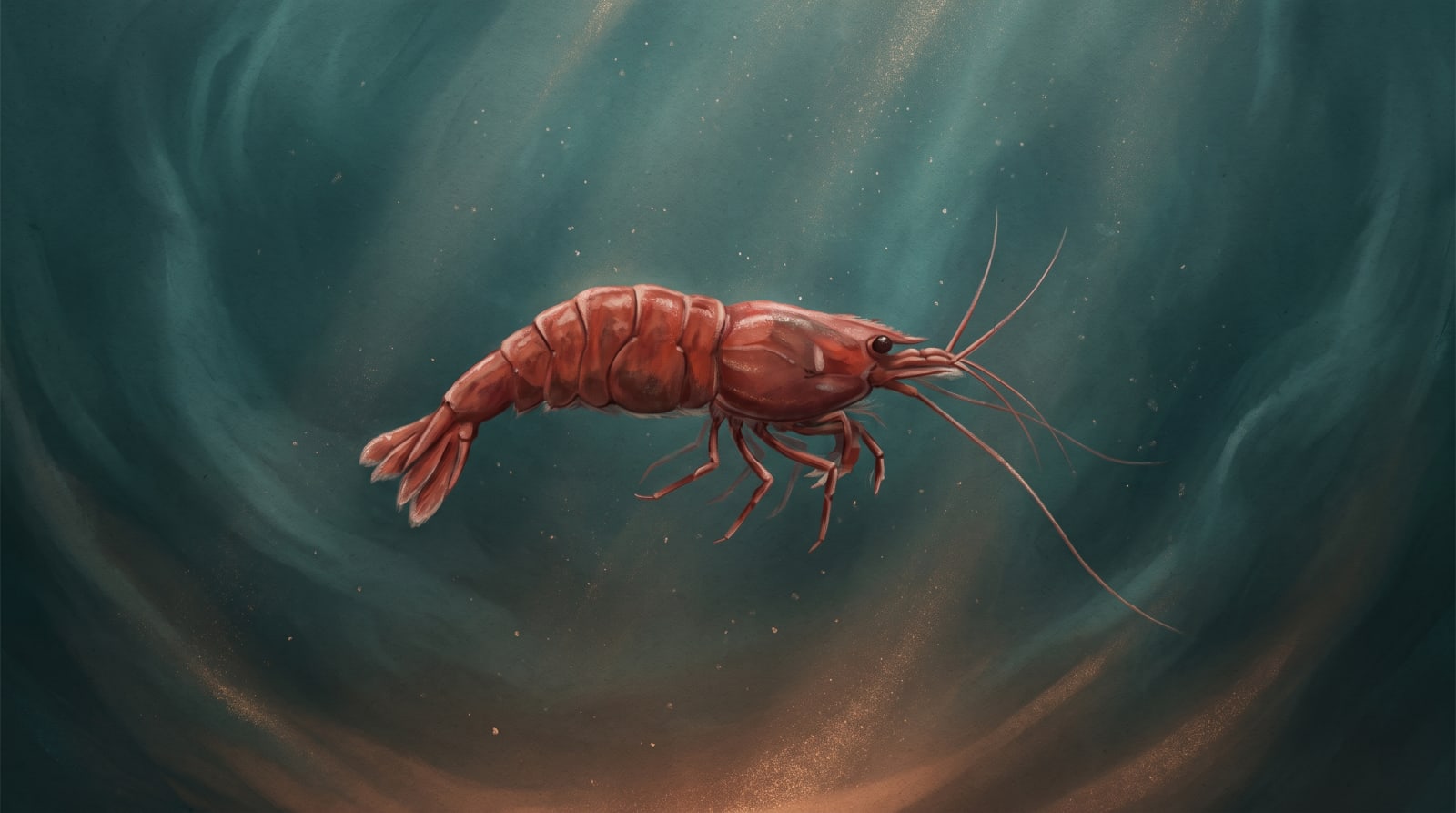
Here's the irony that opens any honest copper article: shrimp blood is built on copper. Where our blood carries oxygen on iron-based haemoglobin, shrimp and other invertebrates use haemocyanin, a copper-based molecule that tints their blood faintly blue. Copper is essential to the animal. And yet dissolved copper in the water is one of the deadliest things you can put near a shrimp tank — a trace a fish would never notice can flatten a colony in a day. The metal they're built on is the metal that kills them.
Why copper is so toxic to shrimp
The contradiction resolves once you separate copper locked safely inside the body from free copper ions loose in the water. The haemocyanin in a shrimp's own blood is bound up and controlled. Free copper in the water column is a different beast: it's a potent biocide, which is exactly why it's used to kill snails, algae and parasites. Invertebrates are the target, and shrimp are invertebrates.
Dissolved copper attacks shrimp at the gills and interferes with the moulting cycle and the systems that regulate salts and minerals — the very processes a shrimp depends on to grow a new shell. Because shrimp are small, unscaled and gilled, they take on waterborne copper far faster than a fish does, which is why a dose that treats a fish disease safely can be lethal to the shrimp beside it.
"Silent killer" is fair. There's no dramatic spike to test for unless you go looking, and the first sign is often shrimp simply failing to moult, or dying off one by one over a week or two. Copper sits near the top of the list whenever we work through why cherry shrimp are dying.
Medications: the number-one danger
By far the most common way keepers kill their shrimp with copper is a fish medication. Copper — as copper sulphate or in a chelated form — is the active ingredient in a great many treatments for whitespot, velvet, external parasites and snail infestations, and every one of them is lethal in a shrimp tank. This is the message to burn in: never dose a copper-based medication in a tank with shrimp, not even at half strength, not even "just for the fish".
If fish in a shared tank need copper treatment, move the fish to a separate hospital tank and treat them there, never the other way around. Copper also lingers. It's absorbed by substrate, ornaments and silicone and can leach back out for a long time, so a tank that once had copper run through it can stay risky for shrimp even after the water's been changed.
Where a disease genuinely has to be treated with shrimp present, it's treated with invert-safe actives, never copper. Our guide to shrimp-safe medications lays out what's safe and what never goes in, and the same caution runs through the shrimp disease ID guide.
The fertiliser question: why trace copper is fine
This is where new keepers panic unnecessarily. Read the ingredients on an aquarium plant fertiliser and you'll often find copper listed — then read a forum thread swearing copper kills shrimp, and conclude you can't fertilise a planted shrimp tank. You can.
The copper in a quality plant fertiliser is there deliberately, as an essential micronutrient for the plants, in a chelated form and a vanishingly small dose. Chelated means each copper atom is bound to a larger molecule that keeps it locked up and releases it slowly, rather than floating free as the toxic ion. At the concentrations a sensible dosing regime produces, it's harmless to shrimp — thriving planted shrimp tanks, ours included, are dosed this way all the time. The danger is a copper medication measured to poison invertebrates, not the micronutrient trace in a fertiliser designed to be used around them.
The rules are simple: dose plant fertilisers lean and to the plants' needs, choose products meant for planted aquariums rather than agricultural or garden feeds, and don't tip in extra "for luck". We go deeper on safe dosing, including liquid carbon and CO2, in ferts and CO2 in shrimp tanks.
Copper from your pipes
A quieter UK source is your own plumbing. Copper pipework is common in British homes, and water that's sat still in the pipes overnight can pick up a little dissolved copper — most so in older houses, in soft-water areas where the water is more aggressive to metal, and in the hot line, which leaches more than the cold.
The fix costs nothing. Don't fill a tank or mixing bucket from the first-draw water that's been standing in the pipes; run the cold tap for a few seconds to clear it first. Use cold water, not hot, for anything going near the tank. And use a water conditioner, because many dechlorinators also bind heavy metals like copper, adding a layer of protection on top of removing chlorine and chloramine — the ones worth using are covered in shrimp-safe dechlorinators. For most keepers on modern plumbing this is a minor risk rather than a colony-killer, but in a soft-water area with old pipes it's worth the few seconds of running the tap.
Other sources worth a glance
A few less obvious places copper turns up:
- Snail-killing products. Many "snail rid" treatments are copper-based — the same biocide, aimed at the same invertebrate group shrimp belong to. Avoid them entirely; deal with a snail bloom by cutting feeding instead.
- Catch-all parasite and "ich" remedies, which sometimes hide copper under a brand name. Always read the active ingredients before anything goes in a shrimp tank.
- Brass and bronze fittings or ornaments, which are copper alloys and can leach into the water. Keep them out.
- Untested tap water in a few areas. Rare, but if you've had unexplained losses on new tap water, copper from the supply or your pipes is worth ruling out.
The habit that covers all of them is the same: read the label for copper, and if in doubt, keep it out of the tank.
Should you test for copper?
You can buy a copper test kit, and it has its uses, but it isn't a must-own the way an ammonia kit is. Copper problems are nearly always traceable to something you did — a medication, a fertiliser change, a new ornament — rather than a mystery, so prevention beats testing.
Where a copper test earns its place is diagnosis: unexplained losses you can't pin on ammonia, nitrite or a bad moult, especially after you've treated a shared tank or changed a product. A reading confirms or clears copper as the culprit. Bear in mind that shrimp react below the level cheap hobby kits reliably detect, so a "zero" isn't a full all-clear — it rules copper in more than it rules it out. For the readings you should test as routine instead, see our Neocaridina water parameters guide.
If you suspect copper poisoning
Honesty first: if a copper dose has gone into a shrimp tank, the outlook for those shrimp is poor, and there's often no save. But if you catch it fast, the response is worth making.
Do large, repeated water changes with clean, dechlorinated, temperature-matched water to dilute the copper as quickly as you safely can. Running activated carbon in the filter helps pull dissolved copper out over the following days. Most importantly, remove the source — the medication, the ornament, whatever introduced it — because there's no point diluting while more leaches in. If copper soaked into substrate or décor during a treatment, that material can keep releasing it, and the hard truth is that a badly contaminated tank is sometimes best stripped and restarted rather than trusted with shrimp again.
The kinder route is never to let it happen: keep copper medications away from shrimp, treat fish elsewhere, dose plant fertilisers lean, and run the cold tap before you fill. Those few habits sit inside the wider routine in our cherry shrimp care guide, and together they retire copper as a threat.
FAQ
Is copper toxic to shrimp?
Very. Dissolved copper is one of the most dangerous things you can add to a shrimp tank — it's a biocide used to kill snails, algae and parasites, and shrimp are invertebrates, the exact target. A dose that treats a fish safely can kill shrimp, shrimplets first. The irony is that shrimp need trace copper internally for their blood, but free copper in the water attacks their gills and moulting.
Can I use plant fertiliser with copper in a shrimp tank?
Yes, provided it's a quality aquarium plant fertiliser dosed sensibly. The copper in these is a chelated micronutrient in a tiny amount, bound so it releases slowly rather than floating free as the toxic ion — harmless to shrimp at normal doses. What kills shrimp is copper medication measured to poison invertebrates, not the trace in a fertiliser made to be used around plants. Dose lean and you're fine.
What medications kill shrimp?
Anything copper-based is the big one — copper sulphate or chelated copper appears in many whitespot, velvet, parasite and snail treatments, and all are lethal to shrimp. Some general "ich" and anti-parasite remedies hide copper under a brand name, so always read the active ingredients. If fish need copper treatment, move them to a separate tank; never dose it with shrimp present. Several other actives are risky too, so check before dosing.
How do I get copper out of a shrimp tank?
Large, repeated water changes with dechlorinated, temperature-matched water dilute it fastest, and activated carbon in the filter pulls dissolved copper out over the following days. First, remove the source — the medication, ornament or fitting — or you're diluting while more leaches in. Be realistic: copper soaks into substrate and silicone and can linger, so a heavily contaminated tank is sometimes best stripped and restarted.