We breed and sell cherry shrimp, so read this guide knowing exactly who wrote it. But our colony is rebuilding and sales are paused as we write, which makes this a rare thing: a where-to-buy guide from a seller with nothing to sell you today. So here's the honest map of where to buy cherry shrimp in the UK — every channel, what each one is genuinely good at, and where each one quietly falls down.
The four ways to buy, at a glance
Every cherry shrimp for sale in the UK reaches you through one of four channels. Nothing here is a scam and nothing here is perfect; they trade off against each other.
| Channel | Stock quality | Price | Risk | Best for |
|---|---|---|---|---|
| Specialist online breeders | Best available | Fair for what you get | Low, if vetted | Breeding projects, high grades |
| Local fish shop | Variable | Fair | Low–medium | Seeing before buying |
| Chain aquatic stores | Weakest, typically | Fair to high | Medium | Convenience, casual colonies |
| eBay / Facebook hobbyists | Wild variance | Cheapest | Highest | Bargains, local collection |
Specialist online shrimp breeders
The specialist breeder — someone who keeps dedicated colonies and sells the surplus — is where the best stock in the country lives. Dedicated lines mean stronger colour and known genetics; the shrimp were raised in stable, documented water rather than passed through a wholesale chain; and a good specialist will tell you their GH and TDS without being asked, because they know why it matters.
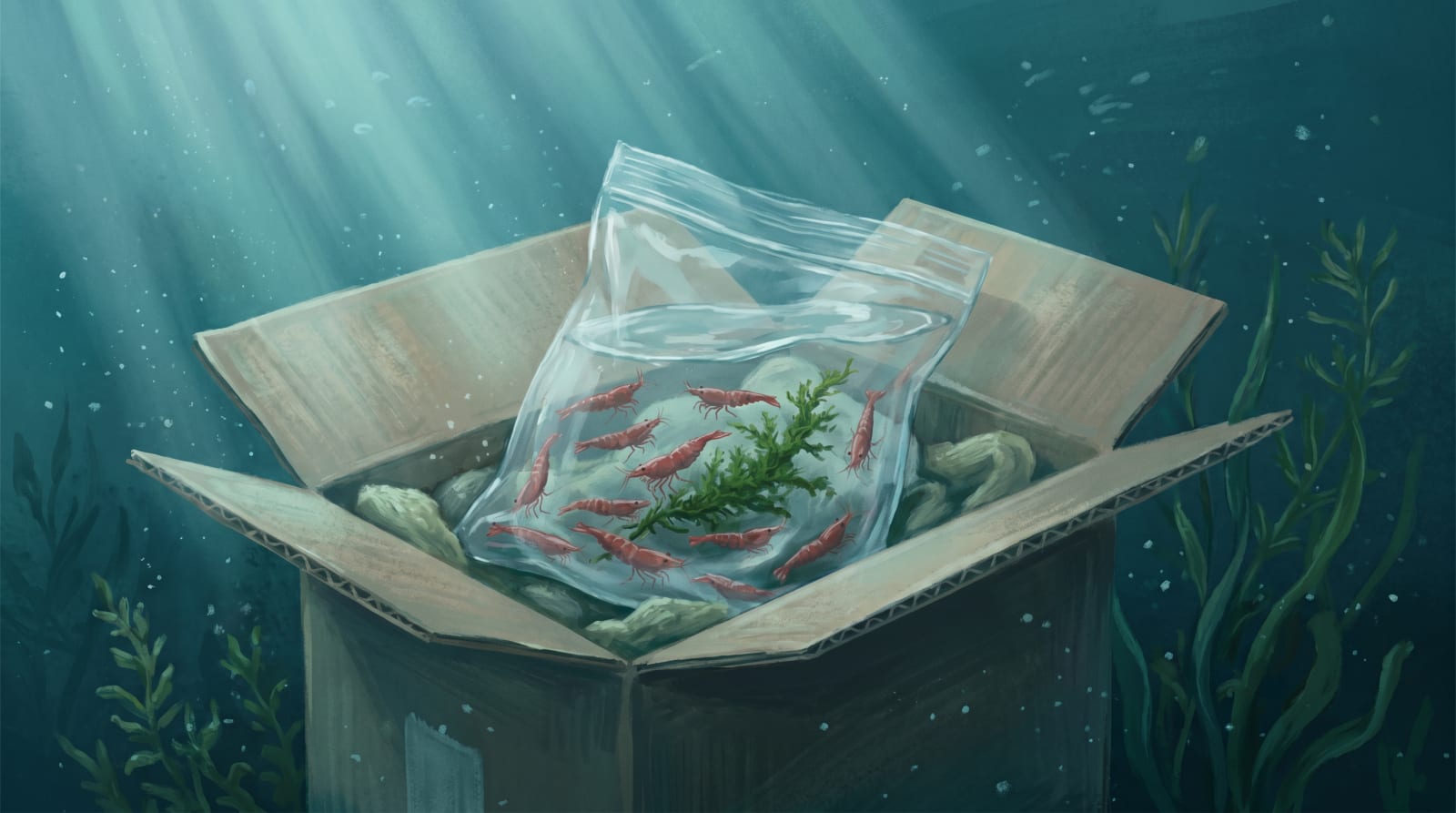
Buying shrimp online in the UK sounds riskier than it is. Livestock has been posted here for decades, and a competent seller ships in insulated boxes with proper bags, a heat pack in winter, and a live-arrival guarantee — how shrimp are shipped shows you exactly what good packaging looks like, and what a fair guarantee covers.
The honest downsides: you can't see the actual animals first, only photos; you'll pay postage on top of the shrimp; and quality between specialists still varies. The filter is simple — ask questions before you pay. A genuine breeder answers water, age, line and guarantee questions quickly and specifically, and we've written the exact list worth sending in 10 questions to ask your shrimp breeder. Vague answers to specific questions are your cue to walk.
Your local fish shop
The independent local fish shop has one advantage no courier can match: you're looking at the actual shrimp. Active, grazing, intact animals in a clean tank tell you more in thirty seconds than any listing photo. You skip shipping stress entirely, you support a shop you'll want existing next year, and many independents will order shrimp in for you if you ask.
What varies is everything behind the glass. Shop stock is often wholesale-imported with unknown genetics, colours can be mixed in one tank (fine for a display colony, a problem if you want offspring that breed true), and water details may be a mystery to whoever's on the till that day. None of that makes the shop a bad buy — it makes it a buy you inspect. Ask what water the shrimp are kept in. A shop that can answer with numbers is a shop that's keeping them properly; a blank look means the shrimp's history is a guess.
The red flags are the same everywhere: dead stock in the tank, pale shrimp huddled in corners, bare stressed setups. Walk away from those whatever the price.
Chain aquatic stores
The chains are the most convenient way to buy cherry shrimp in the UK, and convenience is genuinely worth something: long opening hours, stock most weeks, staff who can at least point you at the right tank.
Typically, though, chain shrimp are the weakest genetics on the market. High-volume importing optimises for price and survival-to-sale, not for line quality, so expect washed-out reds, loose grade labels and mixed heritage — and expect nobody to know the GH. A chain cherry is still a cherry: hardy, breedable, perfectly capable of founding a happy colony. But if you're paying high-grade money, you should be getting high-grade shrimp, and that's rarely what the chain tank holds. Inspect exactly as you would anywhere else, and keep your expectations calibrated to the channel.
eBay, Facebook and fellow hobbyists
The hobbyist market is the cheapest way to buy shrimp in the UK and the least protected. Both things are true at once, which is why it deserves its own full guide — eBay and Facebook shrimp: risks and wins — and a short honest summary here.
The wins are real. A local keeper selling surplus is often selling exactly what you want: fresh genetics from a thriving colony, at mates' rates, sometimes ten minutes up the road. Collection in person is the sleeper best option in the whole hobby — you see the seller's tanks, the shrimp travel for minutes rather than a day, and there's no packaging to survive.
The risks are equally real: stock photos instead of the actual animals, culls sold under grade names they haven't earned, no live-arrival cover, and parcels posted carelessly into a heatwave or a cold snap. Vet a hobbyist exactly as you'd vet a specialist — actual photos, water numbers, straight answers — and treat any listing that dodges those as decoration.
Timing your purchase: the weather rule
One factor cuts across every posted channel: the weather on shipping day. Shrimp travel well inside a sensible temperature band and badly outside it — a parcel crossing the country in a July heatwave or a January cold snap is a gamble no packaging fully removes, even with a winter heat pack doing its best. Good specialists watch the forecast and hold orders over extreme weeks. That delay is a mark of a seller worth keeping, not poor service, and it's worth asking about before you order rather than after.
Hobbyist listings rarely show the same restraint, which is when local collection earns its keep again. If you're buying in midsummer or midwinter, ask the seller how they handle extremes — and if the answer is a shrug, wait for kinder weather or buy where no courier is involved.
"Cherry shrimp shop near me": think water, not miles
Everyone searches some version of cherry shrimp shop near me, and we understand the instinct — but distance is the wrong filter. The seller worth finding is the one whose water is closest to yours, not whose door is. Shrimp raised in water like your tap acclimatise gently and settle fast; shrimp raised in very different water need long, careful acclimation however short the car journey home was.
So use "near me" cleverly. A breeder in your own water company's area — hard South East water, soft Welsh or Scottish water, whatever you're on — is gold regardless of whether they're a shop with a sign. Local aquarist clubs and local collection from hobbyist sellers usually beat whatever the map app surfaces, which will mostly be the chains. And whoever you buy from, near or far, ask the water question first.
What you should pay
UK cherry shrimp prices are mercifully simple. Standard-grade shrimp are £2–4 each, whatever the colour. High-grade lines — deep, even, fully covered colour — sell as groups at £30–50 per 10, with the rarest lines at the top of that range. That's the whole market; the full breakdown of what moves a shrimp up and down inside those bands is in cherry shrimp prices UK.
Those two numbers do your screening for you. Meaningfully cheaper than £2 usually means culls, mixed lines or a colony being dumped — sometimes a fine deal for a skittles tank, never a foundation for breeding true colour. Meaningfully dearer than the £30–50 band wants justifying by genuinely rare genetics, not by an inventive name on the listing. And "assorted colours" at a bargain price carries a genetic catch: mixed Neocaridina lines interbreed, and the offspring drift back towards wild-type brown within a couple of generations.
Buying red cherries specifically
Red deserves its own note, because it's what most first-time buyers want and it's where grade language gets abused hardest. If you're setting out to buy red cherry shrimp, learn the ladder before you shop: red grades run Cull → Cherry → Sakura → Fire Red → Painted Fire Red, on depth and coverage of colour. The same shrimp can be sold honestly at standard-grade money or dishonestly at high-grade money, and the difference is one grade word on a listing.
Ask for photos of the seller's actual stock, judge the whole group rather than the best two females at the front, and cross-check what you see against the Neocaridina grades guide. The red cherry species profile covers what a good red line looks like at each rung, and why females always read a grade above their brothers.
The pre-purchase checks, whoever you buy from
Channel chosen, seller found — the final gate is the same everywhere. Buy shrimp that are actively grazing, with intact antennae and legs, even colour across the group, and ideally berried females in the tank, because a breeding colony is a happy colony. Skip any tank with deaths in it. Buy ten or more so the colony has both sexes and genetic room to grow. The full inspection list, including the subtler warning signs, is in what healthy shrimp look like.
Then protect your purchase for one more hour: however good the seller, the move into your water is the riskiest moment of a shrimp's life, and drip acclimation is what gets them through it. Buying well and acclimating badly wastes everything the right seller just did.
A straight answer about our own shrimp
And the channel this site represents: buying direct from us. We breed Neocaridina lines in dedicated colonies, in stable UK water, and we sell the surplus in groups of ten with photos of the actual stock — because that's precisely the specialist-breeder standard this guide has been holding everyone else to. Right now the colony is rebuilding and sales are paused; if you'd like first refusal when that changes, join the waitlist and you'll get the email when the next broods are graded and ready.
FAQ
Where can I buy cherry shrimp in the UK?
Four places: specialist online breeders (best genetics, shipped to your door), independent local fish shops (see the animals first), chain aquatic stores (convenient, typically the weakest lines) and hobbyist sellers on eBay, Facebook or locally (cheapest, most variable). For a breeding project, buy from a specialist; for a casual colony, any channel works if the shrimp pass a health check.
How much do cherry shrimp cost in the UK?
Standard-grade cherry shrimp cost £2–4 each across every channel. High-grade lines with deep, full colour coverage sell at £30–50 per 10, with rare lines at the top of that range. Prices far below that usually mean culls or mixed lines; prices far above want justifying by genuinely rare genetics rather than a creative listing title.
Is it safe to buy cherry shrimp online?
Yes, from a competent seller. Shrimp ship well in insulated boxes with proper bags and, in winter, a heat pack — and good sellers back arrivals with a live-arrival guarantee. Before paying, ask for photos of actual stock, the water parameters they're kept in, and the guarantee terms. Then drip acclimatise on arrival, because the transition into your water is the riskiest step.
Should I buy cherry shrimp from a chain pet store?
You can — chain cherries are hardy Neocaridina like any others, and plenty of good colonies started in one. Just calibrate expectations: chain stock is typically mass-imported with the weakest genetics and loosest grade labels on the market, so pay standard-grade money, inspect the tank for deaths and lethargy, and don't expect high-grade colour to breed out of it.
How many cherry shrimp should I buy to start?
Ten or more. A group that size all but guarantees both sexes and gives the colony enough genetic breadth to grow without inbreeding trouble. Buying two or three "to test the tank" mostly buys you stressed shrimp and no momentum — at £2–4 each, the difference between three shrimp and ten is small money against a colony that actually establishes.